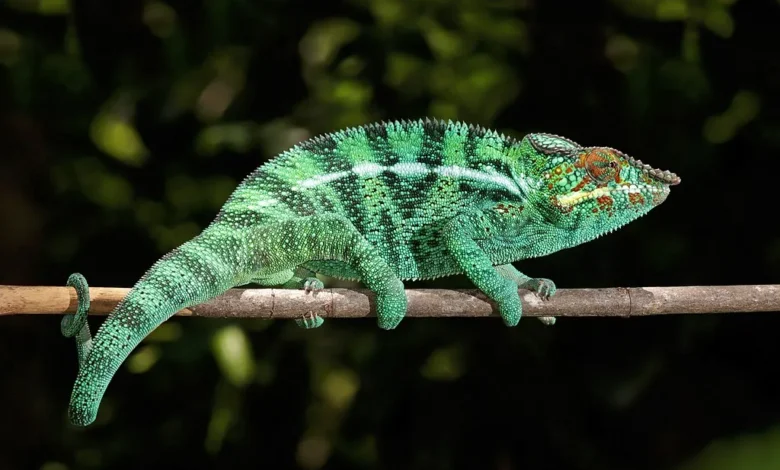
Chameleónovité are one of the most fascinating reptile families in the world. At the beginning, many people think chameleónovité are only known for changing colors. However, there is much more to learn about them. These reptiles have special eyes, long sticky tongues, and unique feet. Because of these features, chameleónovité stand out from other lizards.
Moreover, chameleóovité live mostly in warm places like Africa and Madagascar. Over time, they adapted very well to trees and bushes. As a result, they can move slowly and carefully without being noticed. This ability helps them survive in the wild.
Most importantly, chameleónvité play an important role in nature. They help control insect populations and support balanced ecosystems. Therefore, learning about chameleóovité helps us understand why protecting them is so important.
What Are Chameleónovité?
Chamelenovité are a family of reptiles that include all true chameleons. In simple words, this family groups together many species that share similar traits. For example, all chamelenovité have zygodactyl feet, which means their toes are grouped for gripping branches.
In addition, chamelónovité have eyes that move independently. Because of this, they can look in two directions at the same time. This skill helps them watch for predators while also hunting food. As a result, their survival chances increase greatly.
Also, chameleóovité are mostly tree-dwelling reptiles. Therefore, their bodies are designed for climbing. Their tails can wrap around branches, which gives them extra balance and safety.
Where Chameleónovité Are Found
Chameleóovité are mainly found in Africa. In fact, Madagascar is home to more than half of all chameleon species. Because the island has many forests, chamelónovité can live and grow there easily.
However, chamelenovité are also found in parts of Europe, Asia, and the Middle East. Although they are less common in these areas, they still survive in warm and dry climates. As a result, their range is wider than many people think.
Today, some chameleóovité are kept as pets. Even so, wild habitats remain their best environment. Therefore, conservation efforts are very important.
Why Chameleónovité Are Special
Chamelónovité are special because they can change colors. However, this color change is not only for camouflage. Instead, it also helps them communicate and control body temperature.
For example, darker colors help chameleóovité absorb heat faster. Meanwhile, brighter colors are often used to show mood or warn rivals. Because of this, color change has many purposes.
Overall, chamelónovité are not ordinary lizards. Their abilities make them one of the most interesting reptile families on Earth.
Physical Features of Chameleónovité
Chameleónovité have special skin cells called chromatophores. These cells reflect light differently. As a result, their skin color can change quickly.
However, color change does not mean invisibility. Instead, chameleóovité usually change color based on emotions, light, or temperature. For example, stress can cause darker colors.
Because of this, many myths about chamelónovité have been misunderstood. Still, their color-changing ability remains impressive.
Eyes and Vision of Chameleónovité
Chamelónovité have cone-shaped eyes that move independently. Because of this, they can see almost 360 degrees around them. This skill is very rare in animals.
In addition, chameleóovité have excellent depth perception. When they spot prey, both eyes focus forward. As a result, they can judge distance very accurately.
This vision helps chameleónovié catch insects easily. Therefore, their eyes play a key role in hunting.
Tongue and Feeding Adaptations
The tongue of chamelenovité is extremely long and sticky. In fact, it can be twice the length of their body. Because of this, prey can be caught very quickly.
Moreover, the tongue shoots out in less than a second. As a result, insects do not get time to escape. This hunting method saves energy.
Overall, the feeding system of chamelenovité is one of nature’s best designs.
Habitat and Lifestyle of Chameleónovité
Chameeónovité live mostly in trees and bushes. Forests provide them with food, safety, and shelter. Therefore, healthy forests are essential for their survival.
In addition, chamelenovité prefer warm temperatures. Because they are cold-blooded, sunlight helps them stay active.
Sadly, deforestation threatens many chameleónvité species. As a result, their numbers are decreasing in some regions.
Daily Life of Chameleónovité
Chamelenovité move slowly and carefully. This behavior helps them avoid predators. Therefore, patience is a key survival skill for them.
During the day, chamelenovité hunt insects like crickets and flies. At night, they rest on branches. Because of this routine, they conserve energy.
Also, chamelenovité are usually solitary. They prefer to live alone rather than in groups.
Communication in Chameleónovité
Chameeónovité communicate mainly through color changes. Bright colors may show anger or readiness to mate. On the other hand, dark colors can signal fear.
In addition, body posture also matters. Puffing up the body can make a chameleónovité look larger and stronger.
Therefore, communication without sound is very important for this reptile family.
Types and Species of Chameleónovité
There are over 200 species in the chameleóovité family. Some popular ones include the Veiled Chameleon and Panther Chameleon.
These species are often kept as pets because of their beauty. However, special care is required. As a result, they are not ideal for beginners.
Each species has unique colors and patterns. Therefore, diversity within chameleóovité is very high.
Rare and Endangered Chameleónovité
Some chamelenovité species are very rare. Habitat loss is the main reason. Because forests are being destroyed, these reptiles lose their homes.
In addition, illegal pet trade harms wild populations. As a result, laws are needed to protect them.
Conservation programs are now helping. However, more awareness is still required.
Why Species Diversity Matters
Each chameleónovité species plays a role in nature. If one species disappears, the ecosystem can be affected.
Therefore, protecting all species is important. Education helps people understand this responsibility.
In the end, biodiversity keeps nature balanced.
Why Chameleónovité Matter to Humans
Chameleónovité control insect populations. Because of this, they help farmers and forests.
Without them, insect numbers could increase rapidly. As a result, crops and plants could suffer.
Therefore, chameleónovité are helpful animals.
Chameleónovité in Education and Science
Scientists study chameleónovité to learn about vision and color change. These studies help technology development.
For example, research has inspired new materials. Because of this, nature teaches humans valuable lessons.
Education about chameleónovité also inspires children.
Protecting the Future of Chameleónovité
Protecting chameleónovité starts with habitat conservation. Forest protection is essential.
In addition, responsible pet ownership helps reduce harm. Therefore, awareness is key.
By caring today, chameleónovité can survive tomorrow.
Conclusion
Chameleónovité are truly amazing reptiles. From color-changing skin to unique eyes, they show nature’s creativity.
Moreover, their role in ecosystems makes them very important. Because of this, protecting them benefits everyone.