Ethan Slater and Ariana Grande: A Deep Dive Into Their Story, Public Scrutiny, and Evolving Hollywood Narrative

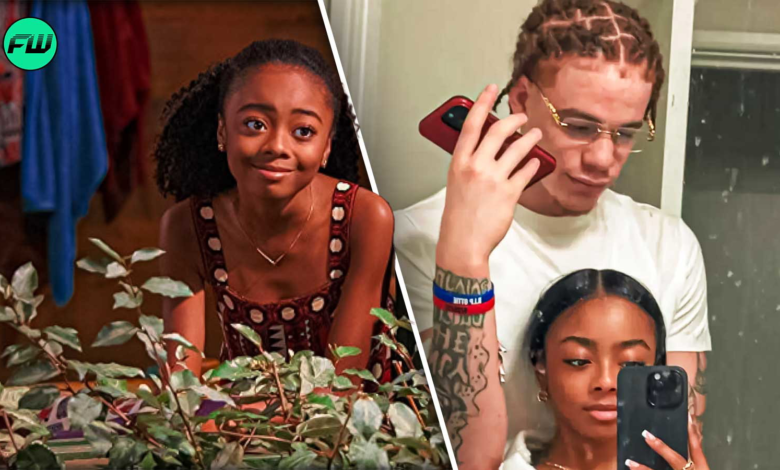
Ethan Slater and Ariana Grande became one of the most talked-about celebrity pairings in recent pop culture memory, not because of a traditional Hollywood rollout, but because of the intense public fascination surrounding their personal and professional timelines. In this feature story, we unpack Ethan Slater and Ariana Grande through the lens of origin, conflict, and transformation—revealing how two careers, two public images, and one unexpected narrative collided under the spotlight.
Here’s the kicker: this isn’t just about romance rumors or headlines. It’s about how modern celebrity culture processes relationships in real time, often before the individuals involved even get to define their own story.
And it gets better—because the deeper you go, the more this becomes a case study in fame, timing, and perception.
Ethan Slater and Ariana Grande: The Origin of Their Hollywood Paths
The story of Ethan Slater and Ariana Grande begins long before their names were ever mentioned together in headlines. Ariana Grande rose to fame as a Nickelodeon star before evolving into one of the most influential pop artists of her generation, known for her vocal range, brand precision, and carefully managed public identity. Ethan Slater, meanwhile, built his career in theater, gaining critical acclaim and award recognition for his performance in SpongeBob SquarePants: The Broadway Musical.
Here is where the contrast matters: Grande operated in global pop superstardom, while Slater’s world was rooted in stage performance and theatrical storytelling. Industry veterans often note that these two entertainment ecosystems rarely overlap in meaningful personal ways unless a shared production or professional intersection occurs.
And then something shifted. Because while both were working steadily in their respective lanes, their paths eventually converged through the entertainment industry ecosystem surrounding film and theater adaptations. It wasn’t a sudden collision—it was a gradual alignment of professional circles, industry events, and shared creative spaces.
It gets more interesting: Hollywood relationships often begin not with spectacle, but with overlap. Casting rooms, rehearsals, production meetings—these are the true origin points. In this case, the narrative that would later dominate headlines started forming quietly long before the public noticed anything at all.
Ethan Slater and Ariana Grande: The Conflict of Public Attention and Private Lives
When Ethan Slater and Ariana Grande became linked in media reports, the reaction was immediate and intense. The conflict didn’t stem from the individuals alone, but from the collision between private life transitions and public interpretation. Ariana Grande’s personal relationships had long been subject to global attention, while Ethan Slater’s relative privacy meant his sudden visibility created a stark contrast in media framing.
Here’s the kicker: the timeline discussion became the centerpiece of public debate. Fans, commentators, and entertainment outlets began reconstructing events, attempting to map personal developments onto public appearances and project schedules. Industry veterans often note that this kind of narrative reconstruction is almost inevitable in high-profile celebrity environments.
And it gets more layered. Because what the public often sees as a single storyline is, in reality, multiple overlapping timelines—career shifts, personal transitions, and professional commitments all happening simultaneously. In this case, speculation quickly overtook nuance, and the conversation shifted from “what is happening” to “what must have happened.”
The pressure intensified as social media amplified every detail. Every post, every interview clip, every public appearance became part of a larger interpretive puzzle. And once that happens, the individuals involved often lose control of the narrative entirely.
Ethan Slater and Ariana Grande: Media Narratives and the Psychology of Fame
The media framing of Ethan Slater and Ariana Grande reveals something deeper about modern celebrity culture: the need for linear stories in a non-linear reality. Audiences prefer clear beginnings, conflicts, and resolutions. But real life—especially in entertainment industries—is rarely structured that way.
Here is the kicker: psychologists who study fame dynamics often point out that parasocial relationships amplify this effect. Fans feel emotionally invested in celebrities, which can lead to a sense of entitlement over narrative clarity. The data suggests a shift toward faster judgment cycles, where public opinion forms within hours rather than weeks.
In this environment, ambiguity becomes uncomfortable. As a result, narratives fill in the gaps, sometimes accurately, but often not. Ethan Slater and Ariana Grande became symbolic figures in this process—not just individuals, but placeholders for broader conversations about relationships, timing, and morality in public life.
And it gets more complicated. Because once a narrative becomes dominant, it tends to self-reinforce. Media outlets reference audience reactions, audiences react to media framing, and the cycle continues. Industry veterans often note that breaking out of this loop requires either time, distance, or a complete shift in public focus.
Key Takeaways: Understanding the Bigger Picture
- Celebrity narratives often form faster than facts can be verified.
- Public interpretation tends to favor simplicity over complexity.
- Ethan Slater and Ariana Grande became part of a broader media cycle, not just a personal story.
- Timing and perception play a larger role in public reaction than actual events.
- Once a narrative solidifies, it becomes self-sustaining across platforms.
Here is the kicker: this isn’t unique to them. It’s a structural feature of modern fame itself.
And it gets better—or more complex—depending on how closely you examine it.
Ethan Slater and Ariana Grande: The Transformation of Public Perception
Over time, the narrative surrounding Ethan Slater and Ariana Grande began to evolve. What initially appeared as a sudden media storm gradually transformed into a longer conversation about privacy, transition, and the cost of visibility. As the intensity of headlines shifted, so too did the tone of public discussion.
Here is the kicker: transformation in celebrity narratives rarely comes from official statements alone. It comes from audience fatigue, shifting news cycles, and the emergence of new stories that redirect attention. In this case, both individuals continued their professional trajectories, while the public conversation slowly diversified.
Industry veterans often note that reputational narratives in Hollywood are not static—they are fluid, shaped by ongoing work, interviews, performances, and time. As new projects and appearances emerge, older narratives lose dominance, even if they never fully disappear.
And it gets more insightful: this process reflects a broader truth about fame in the digital age. Attention is not permanent. It moves, reshapes, and reassigns meaning constantly. What feels like a defining moment in one week can become a footnote months later.
Ethan Slater and Ariana Grande: Moving Beyond the Headlines
As the public conversation matured, Ethan Slater and Ariana Grande shifted from being a singular headline-driven topic to part of a larger cultural discussion about relationships under scrutiny. Their names became less about instant reaction and more about how audiences engage with celebrity storytelling itself.
Here is the kicker: the most enduring impact of such narratives is not the event itself, but the reflection it triggers in media consumption habits. People begin to question how stories are constructed, why certain details are emphasized, and how quickly assumptions are formed.
And it gets more reflective. Because ultimately, this story illustrates a core reality of modern fame: no narrative exists in isolation. Every personal development is filtered through audience interpretation, algorithmic amplification, and media framing.
Industry veterans often emphasize that longevity in public life depends not only on talent, but on adaptability within this narrative ecosystem. Both Ariana Grande and Ethan Slater continue to operate within industries that demand constant visibility while also requiring personal boundaries—a balancing act that defines much of contemporary celebrity culture.
Conclusion: What the Ethan Slater and Ariana Grande Story Really Represents
At its core, the Ethan Slater and Ariana Grande narrative is less about a single relationship and more about how stories are built in the age of instant information. It reflects the speed of digital interpretation, the intensity of public curiosity, and the challenge of maintaining personal complexity in a simplified media environment.
Here is the kicker: every headline is just a snapshot. It captures a moment, not the full picture.
And it gets even clearer when you step back. Because what remains after the noise fades is not just curiosity about who is linked to whom, but a broader understanding of how fame reshapes reality itself.
In the end, Ethan Slater and Ariana Grande are not just names in a trending topic—they are part of an ongoing cultural conversation about privacy, perception, and the evolving rules of modern storytelling in entertainment.
You May Also Read