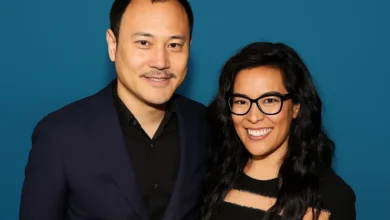
Derek Mathewson: The Strategic Architect of Community-Led Growth
In the ever-evolving landscape of digital business, where algorithms shift and trends fade, one asset remains perpetually undervalued yet supremely powerful: a genuine, engaged community. Few individuals have understood and codified the architecture of this power as effectively as Derek Mathewson. His work transcends the typical buzzword-laden approach to “community building,” presenting instead a rigorous, strategic framework for turning collective user energy into sustainable competitive advantage and organizational resilience. This is not a story of fleeting social media fame, but of deep, structural business transformation. The methodologies and mental models associated with Derek Mathewson have become a north star for product leaders, startup founders, and enterprise executives seeking to build brands that last. This article delves into the core principles, practical applications, and enduring legacy of his approach, serving as a definitive guide to understanding why his perspective is more relevant today than ever before.
The Foundational Philosophy of Value-Centric Communities
At the heart of Derek Mathewson‘s philosophy is a radical inversion of the traditional business-community relationship. He posits that a community is not a marketing channel to be leveraged, but a complex, living ecosystem that must be nurtured for mutual value. The primary question shifts from “What can this community do for us?” to “What foundational value can we provide to empower this community?” This value-centric mindset requires deep empathy and a long-term commitment to serving member needs above short-term corporate KPIs.
This foundational shift dismantles the transactional nature of many modern “community” initiatives. Instead of focusing on extraction—mining the community for leads, testimonials, or cheap marketing—the model becomes one of contribution. The organization’s role is to build the infrastructure, set the cultural tone, and provide the resources that allow community members to create value for each other. In this ecosystem, the brand evolves from a central broadcaster to a respected facilitator and co-creator, with Derek Mathewson often emphasizing that sustainable authority is earned through service, not declared through messaging.
Distinguishing Audience from Community
A critical clarification in this framework is the stark difference between an audience and a community. An audience is a passive collective defined by a one-to-many relationship; they consume content, watch events, and receive broadcasts. A community, in contrast, is defined by the many-to-many connections between its members. The value is generated laterally, between peers, not just vertically from the organization to the individual. Derek Mathewson’s strategies are meticulously designed to foster these lateral connections, transforming passive subscribers into active participants.
Recognizing this distinction prevents strategic misallocation of resources. You can have a massive audience with zero community, and you can have a small, tight-knit community that drives immense strategic value. The metrics differ, the engagement tactics differ, and the organizational mindset differs entirely. Building an audience is about reach and impressions. Building a community, as articulated by thought leaders like Derek Mathewson, is about depth, trust, and networked relationships. Confusing the two leads to flawed strategies that measure the wrong outcomes and ultimately fail to unlock the true power of a connected user base.
The Platform Strategy and Flywheel Design
Moving from philosophy to mechanics, a core tenet of the Derek Mathewson approach is the concept of the community as a strategic platform. This isn’t just about using a platform like Discord or Circle; it’s about architecting your entire community initiative as a platform that enables specific user interactions and value exchanges. The platform provides the rules, tools, and space for members to build upon, much like an operating system allows for the creation of diverse applications. This design thinking ensures scalability and prevents the community from becoming a glorified help desk or feedback forum.
Central to this platform is the design of a self-reinforcing flywheel. A well-designed community flywheel identifies key actions that generate momentum. For example, a member shares a success story (value creation), which is recognized by the community team (validation), inspiring two other members to engage and attempt similar projects (participation), who then encounter challenges and seek solutions in the community forums (support), leading to new insights that become shared knowledge (value creation), and the cycle continues. Derek Mathewson excels at mapping these frictionless, incentive-aligned loops that turn casual users into passionate advocates and co-developers.
Operationalizing Community-Led Growth
For growth teams, the principles championed by Derek Mathewson translate into a measurable methodology known as Community-Led Growth (CLG). CLG sits alongside Product-Led Growth (PLG) and Sales-Led Growth (SLG) as a primary go-to-market motion. It operates on the premise that a thriving community directly drives acquisition, activation, and retention through organic advocacy, peer-to-peer education, and network effects. The community itself becomes the most credible and scalable segment of the growth team.
Operationalizing CLG requires integrating community health metrics into the core business dashboard. Instead of just tracking Monthly Active Users (MAU), teams following a Derek Mathewson-inspired model track metrics like connection density (how many inter-member connections exist), question resolution time (by peers, not staff), and the percentage of product ideas sourced from the community. This shifts the community from a cost center in the marketing department to a revenue-influencing engine with clear, attributable impact on customer lifetime value (LTV) and reduction in customer acquisition cost (CAC).
Building Brand Resilience Through Shared Narrative
Beyond growth, a profound outcome of a mature community is unprecedented brand resilience. In times of crisis, product missteps, or competitive threats, a community grounded in shared values and mutual trust does not fracture; it often mobilizes. This resilience stems from a co-created narrative. The brand story is no longer a carefully crafted message from headquarters, but a living story written collectively by the community’s experiences, successes, and even its collaborative problem-solving during failures.
This shared narrative acts as a buffer against market volatility. When customers feel like owners and participants in the brand’s journey, their loyalty becomes adversarial to competition. They don’t just buy a product; they belong to a collective mission. The work of Derek Mathewson highlights how fostering this sense of shared ownership—through transparency, co-creation programs, and empowering community leaders—builds an asset that cannot be easily replicated by competitors, no matter their budget. It is the ultimate moat.
Ailbhe Rea: The Political Journalist Defining Westminster’s New Era | Profile & Analysis
Leadership and Cultural Alignment
A strategic community cannot be an island within a company; it requires deep alignment with internal culture and leadership buy-in. Derek Mathewson consistently underscores that the values exhibited within the community must be a true reflection of the company’s internal values. If a company preaches collaboration externally but operates in departmental silos internally, the dissonance will eventually seep into the community experience, eroding trust. Authenticity is non-negotiable.
Therefore, implementing this model often necessitates internal change. It requires leaders who are willing to listen, engage authentically, and share credit. It requires product teams that genuinely prioritize community-sourced feedback. It requires executives to value qualitative community sentiment as highly as quantitative financial data. This cultural alignment turns the community from a project into a core pillar of the company’s identity, with advocates for the member perspective embedded in every department, from R&D to customer support.
The Evolving Role of Data and Personalization
While human connection is paramount, modern community strategy is increasingly powered by sophisticated data understanding. The approach associated with Derek Mathewson is not anti-technology; it’s about using technology to facilitate better human outcomes. Data analytics help identify lurking experts who could be activated as champions, surface unmet needs bubbling in discussions, and measure the health of different sub-groups within the larger ecosystem. This allows for intelligent, personalized engagement rather than blanket broadcasts.
Personalization within a community context means recognizing members’ unique contributions and tailoring their journey. A new member might receive guided onboarding to key conversations, while a seasoned contributor might be invited to a private brainstorming session with product managers. This respectful, data-informed recognition makes members feel seen as individuals, deepening their investment. It’s a balance of scale and intimacy, using tools to manage the former so human energy can focus on the latter.
Avoiding Common Strategic Pitfalls
Many organizations stumble on the path to building a strategic community by falling into predictable traps. One major pitfall is the “Build It and They Will Come” fallacy. Launching a forum or a Discord server is not a strategy; it’s an act of provisioning infrastructure. Without a clear, compelling initial value proposition and a seed group of engaged early members, these spaces become digital ghost towns. The guidance found in Derek Mathewson‘s work always stresses the importance of a phased launch, starting small with a dedicated pilot group.
Another critical mistake is conflating community management with community strategy. Management is about day-to-day moderation, programming, and engagement—it is tactical and essential. Strategy is the overarching design of the ecosystem, its economic model of value exchange, and its alignment to business objectives. Companies that hire a community manager without a strategic framework simply create a lively venue disconnected from business outcomes. True impact requires both: strategic architecture and skilled, empathetic stewardship.
Future Trends and Adaptation
Looking forward, the principles established by Derek Mathewson are poised to intersect with emerging technological and social trends. The rise of artificial intelligence, for instance, presents both a challenge and an opportunity. AI can automate moderation, summarize discussions, and connect members with relevant content. However, the core value of genuine human connection and trust cannot be automated. The future community strategy will likely involve AI handling administrative scale while human focus shifts to high-touch relationship building, complex conflict resolution, and deep strategic facilitation.
Furthermore, as remote and hybrid work becomes permanent, professional communities focused on learning, networking, and career development will explode. The demand for platforms that offer not just information but belonging and professional identity will grow. The frameworks for building value-centric, peer-driven ecosystems will become standard curriculum for leaders across industries, cementing the relevance of this strategic discipline for decades to come. The core insight—that empowered people connected around a shared purpose are the ultimate durable advantage—is timeless.
Table: Traditional Marketing Community vs. Strategic Value-Centric Community
| Aspect | Traditional Marketing Community | Strategic Value-Centric Community (à la Derek Mathewson) |
|---|---|---|
| Primary Goal | Lead generation, brand awareness, support cost reduction. | Sustainable competitive advantage, innovation, brand resilience. |
| Value Flow | Extractive (value flows from community to company). | Reciprocal (value is created and exchanged among all participants). |
| Org Role | Broadcaster & Moderator. | Facilitator, Platform Architect, & Co-Creator. |
| Key Metrics | Member count, post volume, ticket deflection. | Connection density, quality of peer-to-peer help, community-sourced innovation impact. |
| Member View | Customers or advocates to be mobilized. | Partners, co-developers, and essential stakeholders. |
| Risk of Failure | Low engagement, seen as a “nice-to-have.” | Strategic misalignment, erosion of trust, seen as a failed core initiative. |
Conclusion
The strategic landscape illuminated by Derek Mathewson offers more than a set of tactics; it provides a foundational lens through which to view modern business strategy itself. In a world saturated with identical products and competing messages, the only truly defensible differentiator is the culture and community that forms around a brand. Building this asset requires patience, authenticity, and a steadfast commitment to creating value for others first. It is a long game that pays exponential dividends in loyalty, innovation, and resilience. As we move further into an era defined by digital connection, the organizations that thrive will be those that understand how to architect human ecosystems, not just sell to demographic segments. The legacy of Derek Mathewson is a roadmap for that very journey, challenging leaders to build not just a business, but a belonging.
Frequently Asked Questions
Who is Derek Mathewson in the context of business strategy?
Derek Mathewson is recognized as a visionary strategic architect, particularly in the domain of community-led growth and platform design. His work provides frameworks for businesses to build authentic, value-driven communities that drive sustainable competitive advantage, rather than treating community as a ancillary marketing channel.
What is the core difference between an audience and a community?
An audience is defined by a one-to-many relationship where value flows from a central source to passive consumers. A community, a concept central to Derek Mathewson‘s philosophy, is defined by many-to-many relationships where value is created and exchanged laterally among members, with the organization acting as a facilitator of that exchange.
How does Community-Led Growth (CLG) actually work?
Community-Led Growth operationalizes the community as a primary growth engine. It works by designing a flywheel where engaged members organically attract new users through advocacy, educate and support peers (reducing support costs), and provide innovative product insights. This creates a scalable, trust-based system that lowers acquisition costs and increases lifetime value.
Can large, established enterprises apply these community principles?
Absolutely. While it requires cultural adaptation, large enterprises can apply Derek Mathewson‘s strategic principles by starting with focused pilot communities around specific product lines or user interests. The key is empowering dedicated teams to operate with authenticity and agility, and to integrate community-derived insights formally into product and strategy processes.
What is the most common mistake companies make when starting a community?
The most common mistake is launching a platform (like a forum) without a strategic design for initial value and member-to-member connection. This leads to the “empty restaurant” effect. Success requires a clear plan for who the first members are, what compelling value they will receive immediately, and how they will be encouraged to connect with each other from day one.