In the fast-paced digital world of 2026, it is easy to assume that the humble formal letter has been completely replaced by instant messaging and rapid-fire emails. We live in an era of “tl;dr” (too long; didn’t read) and automated AI responses. However, for undergraduate students preparing to enter a highly competitive global workforce, relying solely on digital shortcuts is a strategic mistake. While an email might get a quick answer, a well-crafted formal letter carries a weight of authority and intentionality that digital pings simply cannot match. It signals to the recipient that you have invested time, thought, and a high level of professional respect into your communication.
For the modern graduate, the ability to pivot from casual Slack messages to a structured, formal document is a “soft skill” that acts as a powerful differentiator. Think of a formal letter as the “business suit” of communication. Just as you wouldn’t wear pajamas to a high-stakes interview, you shouldn’t always rely on a three-sentence email when dealing with complex university appeals, legal inquiries, or high-level job applications. Mastering this medium isn’t just about following old traditions; it’s about understanding the psychology of professional influence and how to stand out in a sea of digital noise.
Navigating the transition from campus life to a professional career often involves managing sensitive situations that require a paper trail. Whether you are disputing an unfair grade or requesting a formal review of university policy, knowing the right channels is crucial. Many students find that utilizing expert letter writing services can provide a significant advantage, offering the structural precision needed to ensure their voice is heard by senior administrators. When you present a document that is formatted perfectly, you are not just sending a message; you are projecting an image of competence and serious intent that commands a response.
The Anatomy of a High-Impact Formal Letter
To rank on the first page of Google and—more importantly—to get a response from a busy professional, your letter must follow a specific hierarchy. In 2026, “Full-Block” style remains the gold standard for clarity. This means every part of the letter is aligned to the left margin, making it incredibly easy to scan on both physical paper and digital PDF screens.
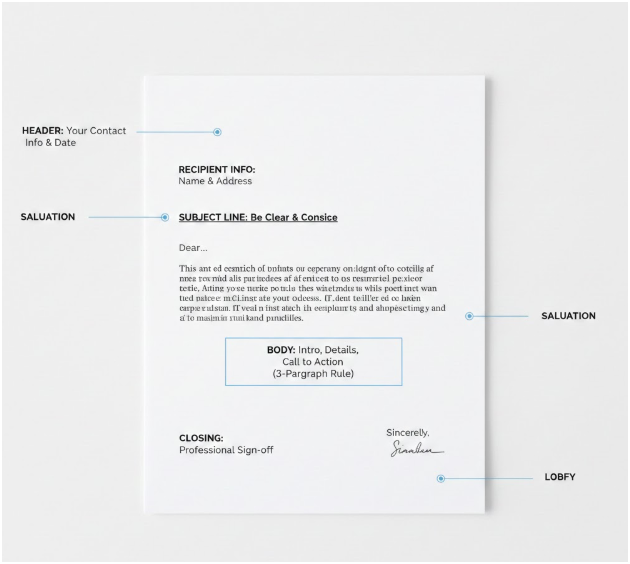
| Component | Purpose | Pro-Tip for 2026 |
| The Header | Provides your contact details and the date. | Use a professional email and a current phone number. |
| Recipient Info | Identifies exactly who you are addressing. | Always try to find a specific name rather than “To Whom It May Concern.” |
| The Subject Line | A “Hook” that summarizes the letter. | Keep it under 10 words; be direct and factual. |
| The Salutation | Sets the tone (Formal vs. Semi-formal). | “Dear Mr./Ms. [Surname]” is safer than first names in initial contact. |
| The Body | The “Meat” of your argument/request. | Use the “3-Paragraph Rule”: Intro, Evidence, Call to Action. |
| The Closing | A professional sign-off. | “Yours sincerely” (if you know the name) or “Yours faithfully” (if you don’t). |
Why “Human” Writing Beats AI-Generated Templates
We have reached a point where most recruiters and university deans can spot an AI-generated letter from a mile away. Automated tools often produce “digital mulch”—content that is grammatically perfect but lacks soul, specific context, and emotional resonance. A human-written letter reflects your unique personality and your specific circumstances. It allows you to weave in personal anecdotes or specific references to a company’s values that a machine might miss.
Authenticity is the new currency. When a graduate takes the time to write a letter from scratch, they are demonstrating “Executive Function”—the ability to organize complex thoughts and present them persuasively. This is exactly what employers are looking for. They don’t just want someone who can prompt a bot; they want someone who understands the nuances of human interaction and professional etiquette.
Strategic Use of the Complaint Letter
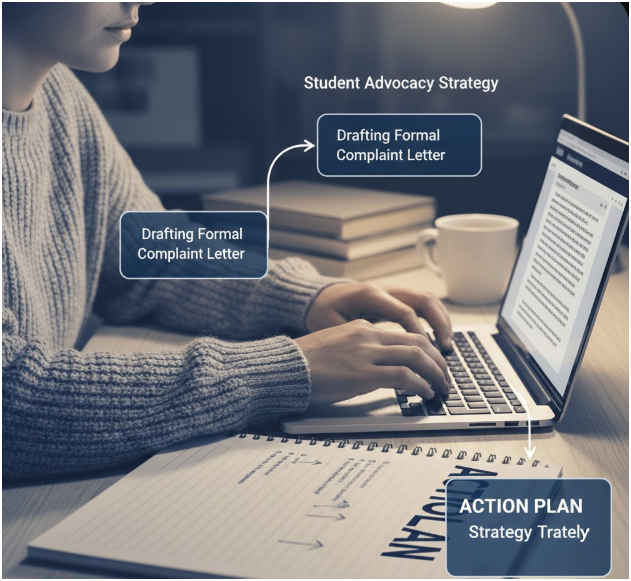
One of the most common reasons a student needs to master this skill is for advocacy. Academic life isn’t always smooth sailing. You might face issues with housing, laboratory access, or administrative errors. In these moments, a casual “Hey, can you look at this?” won’t suffice. You need a document that serves as a legal and professional record. Learning how to write a complaint letter effectively is about balancing your grievances with a professional tone; you want to be firm about the issue but remain polite enough to keep the recipient on your side.
Using a platform like Myassignmenthelp can be a lifesaver when you are under the pressure of finals but need to draft a high-stakes grievance. It’s not just about the writing; it’s about the strategy behind the words. A successful complaint letter doesn’t just list what went wrong; it proposes a solution. This proactive approach shows that you are a problem-solver, not just a complainer, which is a trait highly valued in any global professional environment.
Bridging the Gap: From Campus to Career
As you prepare for graduation, your formal correspondence will shift from academic requests to “Cover Letters” and “Letters of Intent.” These are essentially your first handshake with a potential employer. While a CV tells them what you have done, the letter tells them who you are. It bridges the gaps between your bullet points and explains why your specific background makes you the perfect fit for their team.
In a global market, your tone must be adaptable. A letter written to a creative tech startup in London might have a slightly different “vibe” than one sent to a traditional law firm in Singapore. However, the underlying structure of a formal letter provides a safe, professional framework that works across all cultures. It is a universal language of respect that transcends borders.
5 Final Tips for 2026 Graduates
- Keep it Concise: Busy professionals rarely read past the first page. If you can’t say it in 400 words, you probably haven’t refined your point enough.
- The “So What?” Test: Read every sentence and ask, “Does this help me get what I want?” If the answer is no, delete it.
- Proofread Manually: Spellcheckers miss context. Ensure you haven’t swapped “their” for “there” or “principal” for “principle.”
- Use Active Voice: Instead of “The mistake was made by the department,” say “The department made a clerical error.” It sounds more confident.
- Follow Up: If you haven’t heard back in 10 business days, send a polite follow-up. A formal letter shows you are serious; a follow-up shows you are persistent.
Conclusion: Your Written Legacy
Your degree proves your technical knowledge, but your writing proves your professional character. By mastering the art of the formal letter, you are equipping yourself with a tool that will serve you long after you’ve left the lecture hall. Whether you are using Myassignmenthelp to refine your academic documents or drafting a bold new career inquiry, remember that every letter you send is a brick in the foundation of your professional reputation.
About The Author
I am Lachlan Nguyen, an academic consultant and lead content strategist at Myassignmenthelp. With years of experience in higher education support, I specialize in helping undergraduate students bridge the gap between classroom theory and real-world professional application.