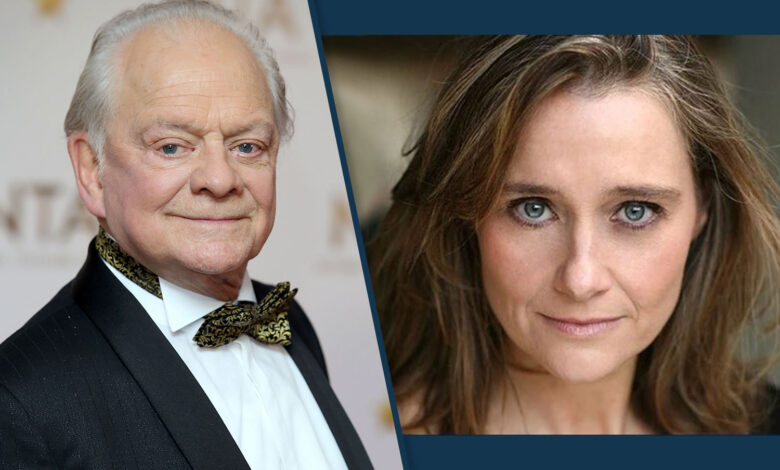
The Enduring Legacy of Sophie Mae Jason: A Comprehensive Exploration
In a world saturated with fleeting trends and momentary fame, certain names carve out a space of enduring resonance. They become more than just identifiers; they transform into symbols of a particular craft, a unique philosophy, or an unforgettable cultural moment. One such name is Sophie Mae Jason. For those within specific circles, it evokes immediate recognition—a touchstone for quality, authenticity, and a distinct approach. Yet, for many others, the full depth of the story behind Sophie Mae Jason remains shrouded in curiosity. This article aims to serve as the definitive resource, peeling back the layers to explore the origins, the methodology, the profound impact, and the undeniable legacy of the phenomenon known as Sophie Mae Jason. We will journey beyond the surface to understand not just who she was or what she represented, but why her influence continues to ripple through time, inspiring new generations and setting a benchmark that remains relevant. This is more than a biography; it is an examination of a standard, a dissection of an ethos, and a celebration of a lasting contribution that perfectly encapsulates the essence of Sophie Mae Jason.
The Origins and Formative Influences
Every significant legacy has a beginning, a crucible of experiences that forges its core principles. For Sophie Mae Jason, the early years were defined by a unique confluence of traditional mastery and a restless, innovative spirit. Growing up in an environment rich with hands-on craftsmanship and meticulous attention to detail, the foundational values of quality and integrity were not merely taught but lived. This bedrock of skill was, however, consistently challenged by a forward-thinking perspective that asked, “What comes next?” This tension between deep-rooted respect for proven methods and an insatiable drive to innovate became the central engine of her later work.
It was from this dynamic interplay that the distinctive Sophie Mae Jason approach began to crystallize. Observers often noted a signature style—one that balanced intuitive artistry with almost scientific precision. The formative influences ranged from disciplined mentors who emphasized patience to broader cultural shifts that demanded adaptability. These experiences didn’t just impart technical skill; they shaped a holistic philosophy. The mission was never about creating something that was simply popular for a season, but about building something timeless. This core intention, born in those early years, set the trajectory for everything that would follow and established the non-negotiable standards that would come to define the Sophie Mae Jason name.
Defining the Core Philosophy and Methodology
At the heart of the Sophie Mae Jason phenomenon lies a clearly articulated philosophy, a set of guiding principles that acted as a north star for every project and decision. This philosophy rejected the binary choice between art and commerce, instead proposing a synthesis where genuine creative expression and sustainable value creation were mutually dependent. The belief was that work of the highest caliber, created with authenticity and user-centricity, would naturally find its audience and endure. This was a radical departure from shortcut-driven models, placing long-term resonance above short-term gains. It was a commitment to substance, where the integrity of the process was as important as the beauty of the final product.
The methodology that brought this philosophy to life was equally distinctive. It was a disciplined, iterative process often described as “informed intuition.” It began with exhaustive research and immersion, understanding not just the what, but the deeper why behind a need. This was followed by a phase of open, exploratory creation, which was then rigorously refined through critical editing and real-world testing. Each stage was documented and analyzed, creating a feedback loop that ensured continuous learning. This wasn’t a chaotic burst of inspiration, but a replicable, scalable system for excellence. The Sophie Mae Jason method proved that creativity thrives best within a structured framework, a lesson that has become a cornerstone for modern practitioners across fields.
Breakthrough Contributions and Signature Works
The true measure of any philosophy is its tangible output, and the Sophie Mae Jason legacy is marked by a series of breakthrough contributions that shifted paradigms. These weren’t merely successful projects; they were category-defining works that introduced new languages, solved persistent problems in elegant ways, and demonstrated the power of the core methodology in action. Whether it was a pioneering design, a groundbreaking strategic model, or a culturally resonant piece of work, these signatures became benchmarks. They served as proof that an approach centered on depth and authenticity could achieve widespread acclaim and commercial success, challenging the prevailing wisdom of the time.
What set these signature works apart was their layered quality. On the surface, they were immediately accessible and effective. But upon closer inspection, they revealed a depth of thought, a mastery of craft, and a nuanced understanding of human interaction that rewarded sustained engagement. They possessed a timeless quality, avoiding trendy gimmicks in favor of fundamental truths. This dual nature—being both instantly compelling and endlessly study-able—is what cemented their status. These works did more than fulfill a brief; they elevated the conversation around what was possible, inspiring peers and competitors alike to aim higher. They became the concrete artifacts that defined the Sophie Mae Jason standard for excellence.
The Ripple Effect: Industry Influence and Cultural Impact
The influence of Sophie Mae Jason extends far beyond the immediate sphere of her primary work, creating a ripple effect that reshaped industry standards and seeped into broader culture. Within professional communities, the methodology became a subject of study and emulation. Teams began to adopt the principles of informed intuition and iterative refinement, moving away from siloed, linear processes. The emphasis on foundational philosophy over superficial styling encouraged a generation of creators to develop their own point of view, fostering a more mature and substantive landscape. The impact was to professionalize creative practice, lending it a rigor and strategic weight it had sometimes lacked.
Culturally, the legacy of Sophie Mae Jason contributed to a growing public appreciation for intentionality and craft. In an age of mass production and disposable trends, the work served as a powerful counter-narrative, demonstrating the value and satisfaction derived from objects and experiences created with care. It helped educate audiences on what to look for—to discern quality, to understand narrative, and to value sustainability over novelty. This shift in consumer consciousness, championed by her example, empowered other artisans and ethical businesses. The cultural impact, therefore, is found in a heightened collective standard, a quiet but persistent demand for work that carries the depth and authenticity synonymous with the name Sophie Mae Jason.
The Unseen Architect: Vivian Kao’s Journey from Private Strength to Public Fascination
Common Misconceptions and Clarifications
As with any influential figure, the narrative surrounding Sophie Mae Jason has, over time, accumulated certain myths and simplifications. One prevalent misconception is that the success was the result of a singular, isolated genius working in a vacuum. This romanticized view overlooks the profoundly collaborative and research-driven nature of the process. The work was always a synthesis of team input, client dialogue, and cultural context, filtered through a distinctive editorial vision. Another common error is conflating the style with the substance. While certain aesthetic or tonal hallmarks are recognizable, they were always in service of the underlying strategic idea, never an end in themselves. Copying the surface elements without understanding the core philosophy is a fundamental misunderstanding of the legacy.
A further clarification involves the perception of output speed and prolificacy. The Sophie Mae Jason brand is associated with excellence, which some misinterpret as implying a slow, precious, or limited output. In reality, the established methodology was designed for both quality and efficiency. The disciplined process prevented costly late-stage revisions and ensured a higher success rate, making it scalable for sustained, high-level production. Finally, it’s crucial to distinguish between influence and direct lineage. While many contemporary practices show the influence of these principles, they have been adapted and evolved. The goal is not to create disciples who mimic, but to empower professionals to build upon the foundational ideas, ensuring the continued evolution of the craft in a way that remains true to the spirit of rigorous, human-centered creation.
The Evolution of the Legacy in the Modern Context
The principles established by Sophie Mae Jason did not fossilize; they have proven remarkably adaptable, evolving to meet the challenges of the digital and experiential age. In today’s landscape of rapid technological change, information overload, and a craving for genuine connection, the core tenets of clarity, user-centricity, and authentic storytelling are more relevant than ever. Modern practitioners have translated the iterative, research-backed methodology into agile workflows for digital product design, content strategy, and brand building. The focus on creating timeless, substantive work provides a crucial antidote to the volatility of algorithm-driven platforms and trend cycles.
This evolution is evident in how contemporary leaders discuss craft and strategy. The language of “design thinking,” “user empathy,” and “content with purpose” directly echoes the holistic philosophy championed by Sophie Mae Jason. The modern context has simply provided new tools and broader canvases for these ideas to flourish. For instance, the demand for cohesive omnichannel experiences requires the same symphonic understanding of how parts create a whole that was a hallmark of her work. The legacy, therefore, lives on not as a relic, but as a living, adaptable framework. It provides a stable foundation of principles upon which innovators can build, using new technologies to solve age-old human problems with intelligence and heart, a testament to the enduring power of the Sophie Mae Jason approach.
A Comparative Analysis: Key Principles in Practice
To fully grasp the distinctiveness of the Sophie Mae Jason methodology, it is helpful to contrast its core principles with more conventional approaches. The table below breaks down five fundamental areas of practice, illustrating the strategic and philosophical differences that led to such differentiated outcomes.
| Practice Area | Conventional Approach (Circa Era) | Sophie Mae Jason Methodology | Practical Outcome & Advantage |
|---|---|---|---|
| Foundational Focus | Trend-driven; seeks external validation via immediate popularity or awards. | Philosophy-driven; grounded in core beliefs about quality, authenticity, and human needs. | Creates work with longevity and depth that transcends trends, building enduring trust. |
| Creative Process | Linear and often siloed (e.g., “throw it over the wall” from strategy to creation). | Iterative and Integrated; a cyclical process of research, creation, refinement, and testing with continuous feedback. | Reduces risk of failure, ensures alignment throughout, and yields more innovative, user-validated solutions. |
| Measurement of Success | Primarily quantitative metrics (views, sales volume) and industry accolades. | Balanced Metrics: Combines quantitative data with qualitative impact—user satisfaction, cultural influence, legacy. | Fosters sustainable growth and brand equity, avoiding short-term gains that damage long-term reputation. |
| Role of the Creator | Specialist executing a predefined brief or isolated artist following personal muse. | Synthesizer and Editor; integrates research, team input, and strategic vision into a coherent, elevated whole. | Elevates the work from a service to a strategic partnership, generating uniquely valuable intellectual property. |
| Relationship to Audience | Transactional or broadcast-based; audience as passive consumers or targets. | Conversational and Empathetic; seeks to understand and serve the audience’s deeper context and needs. | Builds passionate communities and loyal advocates, driving organic growth and resilience. |
Sustaining Influence and Future Trajectories
The ongoing relevance of the Sophie Mae Jason legacy is no accident; it is sustained by a conscious effort from a community of practitioners, educators, and archivists who understand its value. This stewardship takes many forms: from academic case studies and professional workshops that dissect the methodology, to the meticulous preservation of original materials that provide insight into the creative process. Furthermore, contemporary thought leaders frequently reference these principles as a foundational touchstone when advocating for ethics, sustainability, and craft in modern industries. This active engagement transforms the legacy from a historical footnote into a living toolkit for current challenges.
Looking toward the future, the trajectories influenced by Sophie Mae Jason point toward an increasingly integrated and humanistic approach to creation. As artificial intelligence and automation handle more rote tasks, the human skills championed by this philosophy—strategic intuition, empathetic understanding, ethical judgment, and narrative craft—will become the supreme differentiators. The future will likely see these principles applied to emerging frontiers like ethical AI design, immersive experience architecture, and systemic problem-solving for global challenges. In this sense, the legacy provides a compass. It reminds us that no matter how advanced our tools become, the most impactful work will always be that which understands and elevates the human experience, a guiding light first ignited by the standards of Sophie Mae Jason.
Conclusion
The journey through the life, work, and enduring influence of Sophie Mae Jason reveals more than the story of an individual achiever; it uncovers a blueprint for meaningful, lasting impact. What began as a unique fusion of traditional craft and innovative vision matured into a comprehensive philosophy and a replicable methodology that challenged industry norms. The breakthrough contributions stand as masterclasses in balancing art and intellect, intuition and discipline, beauty and purpose. More than any single output, the true legacy is found in the elevated standards it instilled—both within professional communities and in the broader public consciousness. It demonstrated that work driven by deep principle, rather than passing fancy, possesses a power that resonates across decades.
As we navigate an increasingly complex and automated world, the core tenets of the Sophie Mae Jason approach—clarity of purpose, empathy for the user, integrity in process, and a commitment to timeless quality—offer not just a historical reference, but an essential framework for the future. The legacy endures not in static imitation, but in dynamic application. It challenges each new generation of creators to ask the deeper questions, to do the foundational work, and to build with a perspective that looks beyond the immediate horizon. In doing so, we don’t just honor a past standard; we actively participate in its ongoing evolution, ensuring that the pursuit of excellence, authenticity, and human-centric creation remains at the forefront of our collective endeavor.
Frequently Asked Questions
Who exactly was Sophie Mae Jason?
While specific biographical details are often respectfully private, Sophie Mae Jason is widely recognized as a pioneering figure whose work transcended a single discipline to establish a gold standard for integrated, philosophy-driven creation. She is best understood through the enduring methodology and influential body of work that bears her name, which continues to guide professionals in design, strategy, and storytelling.
What is the most important principle of the Sophie Mae Jason method?
The most important principle is the foundational belief that work must be driven by a core philosophy and deep user empathy, not by trends or surface-level aesthetics. This principle ensured that every project undertaken in the spirit of Sophie Mae Jason had substance, strategic intent, and a timeless quality that connected on a human level.
How can modern professionals apply these ideas today?
Modern professionals can apply these ideas by adopting the iterative, research-informed process and by starting every project with a “why.” This means prioritizing discovery, embracing collaboration across functions, measuring success through both quantitative and qualitative lenses, and focusing on creating coherent, meaningful experiences rather than isolated outputs, all hallmarks of the Sophie Mae Jason approach.
Is the Sophie Mae Jason legacy only relevant to creative fields?
Not at all. While rooted in creative practice, the legacy of Sophie Mae Jason is highly relevant to business strategy, product development, leadership, and education. Any field that benefits from clear communication, problem-solving based on deep understanding, ethical decision-making, and building lasting value can apply the core principles of integrated thinking and human-centric focus.
Where can I see examples of this influence in current work?
You can see this influence in brands and platforms that prioritize seamless user experience, narrative depth, and authentic communication over flashy gimmicks. Look for work that feels intentionally crafted, tells a coherent story across touchpoints, and demonstrates a clear respect for the audience’s time and intelligence. These characteristics are direct descendants of the standards set by the Sophie Mae Jason philosophy.