Outernet London Redefining Entertainment, Technology, and Public Space in the Heart of the City

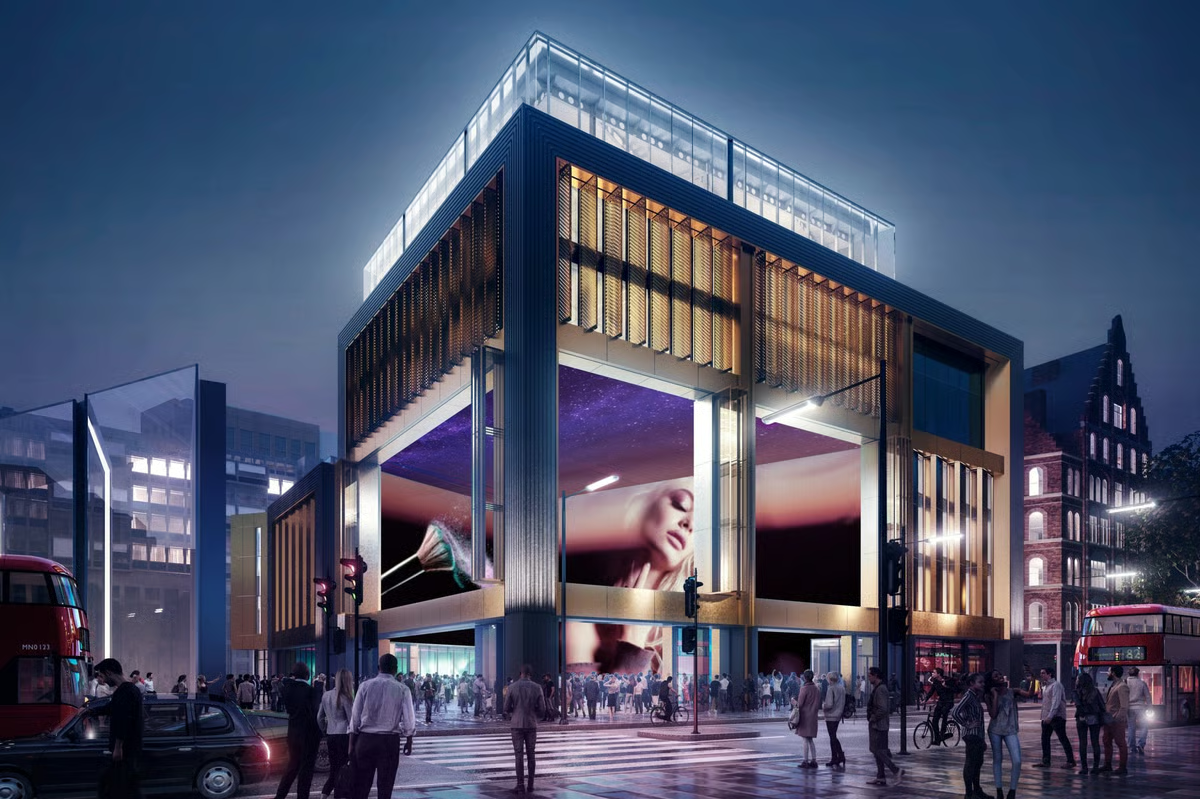
Introduction to outernet london
Outernet London is not just another entertainment venue or digital attraction—it represents a bold reimagining of how public spaces, technology, culture, and creativity can merge into a single immersive experience. Located in the heart of London’s West End, Outernet has quickly become one of the most talked-about developments in the city, drawing visitors from around the world who are curious about the future of urban entertainment.
At its core, Outernet London is a multi-sensory digital district built around some of the largest and highest-resolution LED screens in the world. Unlike traditional entertainment hubs that focus on ticketed events or closed-door experiences, Outernet is largely open to the public, blurring the lines between art gallery, music venue, digital playground, and social gathering space.
What truly sets Outernet apart is its ambition. This is not just a place to watch content; it’s a place to feel it. From immersive visual installations to cutting-edge live performances, Outernet aims to transform how people interact with media, each other, and the city itself. It’s an experiment in scale, creativity, and accessibility—and one that has already begun to influence how cities think about public engagement.
In a time when attention is fragmented and digital experiences are often confined to personal screens, Outernet London flips the script. It takes digital culture and brings it into shared physical space, creating moments that feel collective, unforgettable, and undeniably modern.
The Vision Behind Outernet London
The concept behind Outernet London was driven by a simple but powerful idea: cities should have spaces where creativity, technology, and community intersect naturally. The developers envisioned a place that would serve as a cultural platform rather than a single-purpose venue, offering something new every time someone walks through it.
Unlike traditional developments that prioritize retail or commercial value above all else, Outernet was designed as an experience-first destination. The goal was to create a space where people could stumble upon extraordinary digital art, attend world-class performances, or simply exist within an environment that feels alive and ever-changing.
This vision required thinking far beyond conventional architecture. Outernet was designed from the ground up to integrate massive digital surfaces seamlessly into its physical structure. Every screen, wall, and open space was carefully planned to support immersive storytelling without overwhelming visitors or turning the area into visual noise.
Another key part of the vision was accessibility. Much of Outernet’s content is free to experience, making it one of the most inclusive large-scale digital attractions in the world. Whether someone is a tourist passing through London or a local on their lunch break, they can engage with Outernet without barriers, tickets, or prior knowledge.
Ultimately, Outernet London was created to be a living canvas—one that evolves with culture, technology, and the people who move through it every day.
Location and Architectural Design
Outernet London sits in a prime location near Tottenham Court Road, an area already rich with cultural history and creative energy. This placement is no accident. The West End has long been a hub for entertainment, music, and nightlife, making it the perfect setting for a next-generation digital district.
Architecturally, Outernet is both futuristic and respectful of its surroundings. Rather than standing out as a single towering structure, it weaves itself into the existing urban fabric. Historic facades coexist with ultra-modern interiors, creating a visual dialogue between London’s past and its digital future.
Inside Outernet, the design focuses on openness and flow. Wide walkways, high ceilings, and carefully positioned screens ensure that visitors never feel boxed in or overstimulated. The space feels expansive yet intimate, encouraging exploration without confusion.
One of the most impressive architectural achievements is how seamlessly the technology is integrated. The massive LED displays don’t feel like add-ons or advertisements; they feel like part of the building itself. This level of integration required close collaboration between architects, engineers, and digital artists from the earliest stages of development.
The result is a space that feels both natural and otherworldly—a rare combination that makes Outernet London instantly memorable.
The World’s Most Advanced Digital Screens
At the heart of Outernet London’s appeal are its extraordinary digital screens. These are not ordinary LED displays; they represent some of the most advanced visual technology ever installed in a public space. The resolution, brightness, and scale of these screens allow for incredibly detailed visuals that feel almost three-dimensional.
The centerpiece is often referred to as one of the largest indoor digital canvases in the world. It wraps around visitors, creating a fully immersive environment where visuals move across walls and ceilings in perfect synchronization. This transforms passive viewing into an active sensory experience.
What makes these screens particularly special is how they are used. Instead of being dominated by advertising, they showcase digital art, short films, animations, and interactive installations. Artists are given the freedom to experiment with scale and movement in ways that would be impossible on traditional screens.
The technology also supports real-time content changes, allowing Outernet to adapt its programming instantly. This means the space can transform throughout the day, offering calm, ambient visuals in the morning and high-energy displays in the evening.
By treating screens as artistic tools rather than commercial billboards, Outernet London has redefined what digital displays can be in public environments.
A New Kind of Entertainment Venue
Outernet London is not limited to digital visuals—it also functions as a cutting-edge entertainment venue. Embedded within the complex is a live performance space designed to host concerts, showcases, and special events across a wide range of genres.
This venue was built with both artists and audiences in mind. Advanced acoustics ensure high-quality sound regardless of where you’re standing, while flexible staging allows for creative setups that go beyond traditional concert formats.
What’s particularly exciting is how the venue integrates digital visuals into live performances. Artists can perform against immersive backdrops that respond to music in real time, turning concerts into fully audiovisual experiences rather than just sound-focused events.
Outernet has already hosted performances from emerging artists as well as established names, positioning itself as a launchpad for new talent and a playground for creative experimentation. It’s a space where music, visuals, and technology come together seamlessly.
This hybrid approach to entertainment reflects broader changes in how audiences engage with live events, making Outernet London a forward-thinking model for the future of performance spaces.
Digital Art and Creative Expression
Digital art plays a central role in Outernet London’s identity. The space regularly features works from international artists, studios, and creative technologists who use the screens as massive digital canvases.
These artworks range from abstract visual experiences to narrative-driven pieces that unfold over time. Some installations are meditative and slow, encouraging visitors to pause and reflect, while others are dynamic and energetic, designed to capture attention instantly.
What’s notable is how Outernet elevates digital art to the same level of importance as traditional fine art. By placing it in a central public space and presenting it at monumental scale, it challenges outdated perceptions of digital creativity as secondary or purely commercial.
For artists, Outernet offers a rare opportunity to work at a scale that few other venues in the world can provide. For audiences, it provides exposure to digital art in an accessible, engaging way that doesn’t require prior knowledge or gallery etiquette.
This commitment to creative expression ensures that Outernet London remains culturally relevant and continuously evolving.
The Role of Technology and Innovation
Technology is the backbone of Outernet London, but it is never allowed to overshadow the human experience. Every technological decision—from screen resolution to sound design—was made with the goal of enhancing emotional impact rather than showing off technical capability.
The infrastructure supporting Outernet is highly advanced, enabling smooth playback of ultra-high-resolution content across massive surfaces without visible seams or delays. This level of precision is essential for maintaining immersion and preventing distractions.
Outernet also embraces innovation in content delivery. Programmable systems allow curators to adjust visuals based on time of day, events, or special occasions. This adaptability keeps the space feeling fresh and responsive.
Importantly, the technology is future-proofed. As new formats, tools, and creative approaches emerge, Outernet’s systems can evolve alongside them. This ensures longevity and relevance in an industry where change is constant.
By treating technology as a means rather than an end, Outernet London demonstrates how innovation can serve creativity and community simultaneously.
Cultural Impact and Public Engagement
Outernet London has already begun to influence how people think about public spaces. By offering free, high-quality digital experiences, it encourages people to spend time in shared environments rather than isolated digital bubbles.
The space attracts a diverse audience—tourists, locals, creatives, families, and professionals—all interacting with the same content in different ways. This shared experience fosters a sense of collective participation that is increasingly rare in modern cities.
Outernet also contributes to London’s cultural economy by supporting artists, performers, and creative industries. It provides a platform for experimentation and exposure that can lead to new opportunities and collaborations.
From a broader perspective, Outernet challenges the idea that technology in public spaces must be commercial or disruptive. Instead, it shows that digital experiences can be enriching, inclusive, and culturally meaningful.
As more cities look to revitalize urban centers, Outernet London serves as a compelling example of what’s possible when creativity and technology are placed at the forefront.
The Future of Outernet London
Looking ahead, Outernet London is positioned to continue evolving as technology and culture advance. Its flexible design and adaptable infrastructure mean that it can host new forms of content, experiences, and events that haven’t even been imagined yet.
Future developments may include more interactive installations, deeper integration with live performances, and expanded collaborations with artists and cultural institutions. As immersive technology becomes more sophisticated, Outernet is well-placed to remain at the cutting edge.
The long-term success of Outernet will likely inspire similar projects around the world. Cities are increasingly searching for ways to engage people meaningfully, and Outernet offers a proven model that balances innovation with accessibility.
Rather than being a static landmark, Outernet London is best understood as an evolving platform—one that grows with its audience and reflects the creative pulse of its time.
Conclusion:
Outernet London is more than just a visually impressive destination; it’s a statement about the future of cities, culture, and digital engagement. By combining immersive technology with open public access, it redefines what entertainment spaces can be.