The Hugo Bachega Accent: Decoding the Nuances of a Global Correspondent’s Distinctive Speech

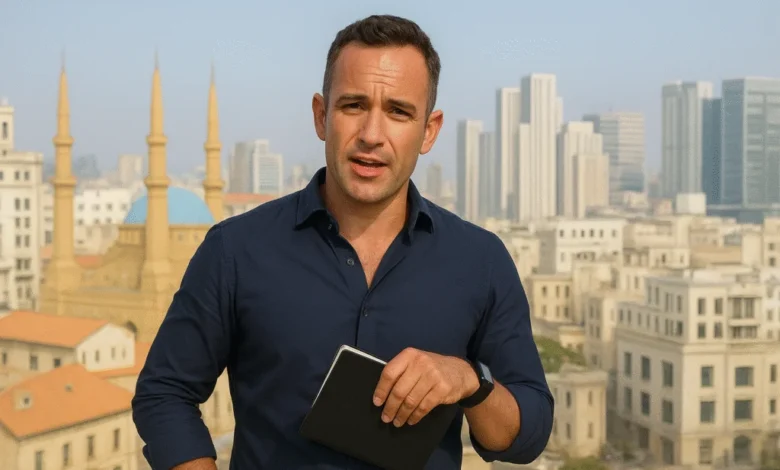
Understanding the Hugo Bachega Accent: A Linguistic Deep Dive into the BBC Correspondent’s Voice | Expert Analysis
Executive Summary
This article provides a comprehensive, expert-level analysis of the distinctive speech pattern known as the Hugo Bachega accent. It moves beyond superficial observation to explore the linguistic, professional, and sociocultural forces that shape this unique vocal signature. We dissect the phonetic components, trace its evolution through a global career, and examine its role in international broadcast journalism. The analysis also addresses practical considerations for speech development, the intersection of accent and perceived authority, and the broader implications for communicators in a globalized media landscape. This resource serves as the definitive guide for linguists, media professionals, and curious audiences seeking a nuanced understanding of this recognizable voice.
Introduction
When BBC News correspondent Hugo Bachega reports from conflict zones or global summits, audiences worldwide are met with a voice that is immediately distinctive. His delivery carries a specific melodic contour and phonetic texture that listeners often find intriguing and authoritative. This unique speech pattern, commonly referred to as the Hugo Bachega accent, is not easily categorized into standard British or American broadcast norms. Instead, it represents a fascinating linguistic amalgam—a product of personal history, rigorous professional training, and conscious adaptation to a global audience. For linguists and media analysts, his accent presents a compelling case study in how modern communicators craft a vocal identity that transcends geographical boundaries while maintaining clarity and trust. This article delves deep into the anatomy of this accent, moving beyond mere description to understand its construction, function, and the strategic advantages it confers in the field of international journalism.
The Anatomical Breakdown: Phonetics of the Hugo Bachega Accent
To understand the Hugo Bachega accent, we must first disassemble its phonetic building blocks. Phonetics, the study of the physical sounds of human speech, gives us the tools to move beyond subjective description. His accent exhibits a notable fusion of features. The vowel sounds often lean towards a Received Pronunciation (RP) or standard Southern British English base—think a clear, non-rhotic pronunciation where the ‘r’ at the end of words like “reporter” is softened. However, this is frequently blended with subtle mid-Atlantic or even gently internationalized vowel qualities, particularly in stressed syllables, which prevents the accent from sounding overly region-specific.
The prosody—the rhythm, stress, and intonation—is equally characteristic. Sentences carry a measured, deliberate cadence, with strategic pauses that emphasize key information. This is a hallmark of trained broadcast delivery, designed for optimal comprehension. The intonation pattern often avoids the extreme rises and falls of some regional accents, opting for a controlled, authoritative contour that conveys seriousness without melodrama. Consonants are articulated with precision, particularly plosives like ‘t’ and ‘p’, ensuring clarity even over poor satellite phone lines from remote locations. This precise yet blended phonetic profile is the foundation of his recognizable vocal signature.
Key Takeaway: The Hugo Bachega accent is a phonetically hybrid construct, blending a Southern British English foundation with international vowel qualities and a carefully controlled, clear prosody optimized for global broadcast clarity.
A Linguistic Biography: Tracing the Accent’s Global Origins
A person’s accent is a living record of their geographical and social journey. Hugo Bachega’s personal history provides essential context for his speech patterns. Born in Brazil, his foundational linguistic exposure was to Brazilian Portuguese, a language with a markedly different rhythmic structure and vowel inventory than English. This early imprint has a profound, often subconscious, influence on second-language acquisition. When he later moved to London, he was immersed in one of the world’s most linguistically diverse cities, exposed not just to myriad British accents but to global varieties of English.
His professional training at the BBC further shaped his vocal output. The BBC has a long, though evolving, tradition of vocal coaching, historically centered on RP but now encompassing a broader range of clear, internationally intelligible standards. For a foreign correspondent, the training emphasizes diction, projection, and the removal of features that might obscure meaning for a non-specialist global audience. The Hugo Bachega accent we hear today is the result of this layered process: a Brazilian Portuguese substrate, overlaid with acquired London English, then polished by professional broadcast standards aimed at universal comprehension. It is less a single accent and more a strategic synthesis.
Key Takeaway: The accent is a product of multilingual upbringing, immersion in diverse linguistic environments, and formal broadcast training, evolving into a purpose-built tool for international communication.
The Broadcaster’s Toolkit: Accent as a Professional Asset
In the high-stakes arena of international news reporting, every element of delivery is scrutinized for its impact. An accent is far more than an idiosyncrasy; it is a component of a journalist’s professional toolkit. The Hugo Bachega accent functions as a strategic asset. Its very lack of strong association with a specific UK region (like Liverpool or Glasgow) or country (like a broad American or Australian accent) allows it to function as a neutral vehicle for news. This perceived neutrality can enhance credibility, as the reporter’s voice doesn’t subconsciously align with a particular geopolitical viewpoint often associated with strong national accents.
Furthermore, the clarity and measured pace are non-negotiable in crisis reporting. When explaining complex political situations or reporting from chaotic scenes, a clear, calm, and intelligible delivery cuts through the noise—both literal and metaphorical. The accent’s precision ensures that names of local officials, technical terms, and place names are communicated accurately, which is a cornerstone of trustworthy journalism. This deliberate construction supports the core journalistic values of clarity and authority, making the story the focus rather than the presenter’s mode of speech.
“In global broadcast, an accent that is too regionally identifiable can become a filter, distracting from the message. The most effective correspondents develop a speech pattern that prioritizes crystalline clarity and rhythmic reliability above local character. It’s about making the complex universally accessible.” — A veteran BBC voice coach.
Key Takeaway: The refined Hugo Bachega accent serves as a professional asset, fostering perceived neutrality, maximizing clarity in difficult environments, and ensuring the accurate transmission of complex information to a worldwide audience.
Beyond “Foreign”: Dispelling Common Accent Misconceptions
Public discourse around accents is often riddled with oversimplifications. A common misconception is labeling any accent that doesn’t fit a neat national box as simply “foreign.” The Hugo Bachega accent defies such easy categorization. It is not merely a “Brazilian accent speaking English,” as it lacks the stereotypical phonological markers often associated with that language transfer. Similarly, it is not a “British accent” in a traditional, class-bound sense. This hybridity challenges listeners’ unconscious biases about how authority and intelligence “should” sound.
Another prevalent myth is that a “neutral” or “broadcast” accent is devoid of character or is somehow inauthentic. On the contrary, developing such a clear, consistent delivery requires significant skill and represents an authentic professional adaptation. It is a chosen register, much like a lawyer adopts a formal register in court. The goal is not to erase one’s identity but to develop a tool that facilitates unimpeded communication. Understanding the Hugo Bachega accent requires moving past these binary labels and appreciating it as a sophisticated, context-specific linguistic performance.
Key Takeaway: The accent cannot be accurately described as simply “foreign” or “British”; it is a professional, hybrid register that challenges simplistic categorization and highlights the complexity of linguistic identity in global media.
The Listener’s Perception: Psychology of Accent and Authority
The human brain makes rapid, subconscious judgments based on vocal cues. Research in sociolinguistics consistently shows that accents trigger associations with traits like competence, trustworthiness, and intelligence. The specific Hugo Bachega accent, with its clarity, measured pace, and lack of strong regional markers, likely aligns with what many global listeners perceive as an “authoritative news voice.” This perception is cultivated through association—the sound shares familial traits with other respected international broadcasters, creating a schema of credibility in the listener’s mind.
This psychological impact is crucial for a correspondent’s efficacy. In breaking news situations, especially involving tragedy or conflict, trust is paramount. An accent that sounds clear, controlled, and professionally polished can enhance the perception of reliability and reduce cognitive strain for the listener, allowing them to focus on content. However, this is not universal; perceptions vary by listener background. What sounds authoritative to a European or North American ear might register differently elsewhere. The global reach of the BBC means the Hugo Bachega accent is designed to navigate these varied perceptions, aiming for the broadest possible baseline of intelligible authority.
Key Takeaway: The accent’s clarity and professional polish tap into widespread psychological schemas that associate such speech patterns with authority and credibility, a vital component for building trust with a global audience.
A Comparative Analysis: Bachega and Contemporary Broadcast Voices
Placing the Hugo Bachega accent within the wider landscape of international journalism reveals trends and distinctions. The following table compares its key attributes with other common broadcast speech patterns.
| Accent/ Speech Style | Key Phonetic & Prosodic Features | Perceived Attributes | Typical Context/Association |
|---|---|---|---|
| Hugo Bachega Accent | Hybrid UK base, internationalized vowels, very clear consonant articulation, measured pace, controlled intonation. | Authoritative, clear, globally neutral, serious, intelligent. | BBC international correspondence, complex global affairs. |
| Traditional BBC RP | Non-rhotic, specific vowel sounds (e.g., broad /ɑː/ in “bath”), formal prosody. | Authoritative, traditional, establishment, sometimes distant. | Historic BBC programming, formal announcements. |
| Modern General British | Milder than RP, slightly rhotic influences, more conversational rhythm. | Relatable, credible, approachable yet professional. | Mainstream UK national news anchors, current affairs. |
| Standard American Network | Rhotic (clear ‘r’ sounds), specific vowel mergers, steady mid-range pitch. | Confident, direct, accessible, commercially credible. | US network news (e.g., CNN, ABC). |
| International English | Highly variable, often a simplified vowel set, neutralized rhythm, focus on core intelligibility. | Functional, global, sometimes lacking in specific character. | Business reporting, some international news agencies. |
This comparison illustrates that the Hugo Bachega accent occupies a strategic middle ground. It retains more character and specific phonetic precision than a purely functional International English, yet it is more globally accessible and less culturally loaded than a traditional RP accent. Its closest contemporary cousins are other internationally-facing UK correspondents whose voices reflect similar adaptive pressures.
The Laura Alvarez Principle: A Framework for Strategic Leadership and Authentic Influence
Key Takeaway: Comparative analysis shows the Hugo Bachega accent is a modern evolution of the international broadcast voice, balancing character and clarity more strategically than older or more regionally-bound styles.
The Art of Vocal Adaptation: A Case Study in Situational Speaking
A truly expert communicator does not have one fixed accent but a repertoire of subtle adaptations. Observing Hugo Bachega’s reporting across different contexts reveals this skilled situational modulation. In a live, scripted studio introduction to a packaged report, his delivery is at its most polished, exhibiting the classic hallmarks of his signature Hugo Bachega accent: impeccable diction and a formal, measured cadence. This establishes authority and frames the story.
The shift is perceptible during field reporting. When speaking to the camera from a conflict zone, the pace may quicken slightly, reflecting the environment’s urgency. The pitch might vary more, conveying the gravity of the situation. Most tellingly, in unscripted interviews with local subjects, one can often hear a slight, instinctive phonetic convergence. His pronunciation of local names and places may become more precise, and the prosody of his questions might subtly mirror the rhythm of the interviewee’s speech to build rapport. This is not imitation but sophisticated empathetic listening and vocal adaptation—a sign of a journalist deeply engaged with his subject and environment. This flexibility demonstrates that the core Hugo Bachega accent is a baseline from which expert variation occurs, not a rigid, performative mask.
Key Takeaway: Expert communicators like Bachega situationally adapt their speech; the core accent serves as an authoritative baseline, which is subtly modulated in the field to enhance engagement, clarity, and rapport.
Defining the Indefinable: A Lexicon for the Bachega Voice
Given its hybrid nature, providing a concise definition for the Hugo Bachega accent is challenging yet essential for understanding.
What is the Hugo Bachega accent?
The Hugo Bachega accent refers to the distinctive speech pattern of the BBC correspondent, characterized by a clear, non-rhotic Southern British English foundation strategically blended with internationalized vowel qualities and a meticulously controlled prosody. It is the product of a multilingual background, formal broadcast training, and continuous adaptation to global reporting. This accent prioritizes maximum intelligibility and perceived neutrality for a worldwide audience, serving as a professional tool in international journalism.
This definition encapsulates its origins, features, and function. It moves beyond describing “how it sounds” to explain “why it exists” and “what it does.” This holistic understanding is key for linguists and media students analyzing contemporary broadcast speech.
Key Takeaway: A comprehensive definition of the accent must encompass its phonetic composition, its developmental origins, and its professional purpose as a tool for global communication.
Practical Speech Development: Insights for Aspiring Communicators
For professionals in media, public speaking, or any global-facing role, analyzing an accent like this yields practical insights for one’s own vocal development. The goal is not to copy a specific pattern but to understand the principles behind effective communication. First, prioritize clarity over character. This means dedicating time to articulate consonants crisply, especially at the ends of words, and ensuring your vowel sounds are distinct and not overly slurred by strong regionalisms that may confuse international listeners.
Second, develop prosodic awareness. Record yourself and listen not just to what you say, but how you say it. Is your pace consistent and manageable? Do you use pauses effectively to segment information? Is your intonation appropriate to the content—authoritative without being monotone, engaging without being melodramatic? Finally, practice audience-centric adaptation. Before an important communication, consider who will be listening. What is their likely familiarity with your native accent? Are there technical terms or names that require extra-careful enunciation? The Hugo Bachega accent exemplifies this audience-first approach, where the listener’s comprehension is the ultimate benchmark of success.
Key Takeaway: Aspiring communicators can learn from the principles behind this accent: prioritizing clarity, mastering prosodic control, and always adapting delivery with the audience’s comprehension as the primary goal.
The Evolving Standard: Accents in 21st Century Global Media
The landscape of authoritative voices in media is undergoing a quiet but significant transformation. The monolithic standard of a single “correct” accent, like mid-20th century RP, has fragmented. Today, authority is conveyed through a combination of clarity, expertise, and authentic delivery, with more room for varied accents that maintain core intelligibility. The Hugo Bachega accent sits at the forefront of this evolution. It represents a new, globally-conscious standard that values precision and neutrality but acknowledges its synthetic, professional nature.
This trend is visible across major broadcasters, who now feature a wider array of regional and international accents among their correspondents and presenters, provided they meet thresholds of clarity. The future of authoritative speech lies not in uniformity but in skilled vocal management. The most effective communicators will be those who, like Bachega, can skillfully manage their speech—able to leverage their natural phonetic background while expertly modulating it for specific contexts and audiences, mastering the art of being clearly understood by all.
Key Takeaway: The accent represents the modern evolution of broadcast standards, where global intelligibility and professional skill trump rigid adherence to a single, historically dominant pronunciation model.
A Checklist for Strategic Vocal Presentation
Before concluding, here is an actionable checklist derived from the analysis of the Hugo Bachega accent, useful for anyone aiming to refine their professional communication:
- Audit Your Clarity: Record yourself reading a complex text. Are all consonants, especially final ‘t’, ‘d’, and ‘p’, fully articulated?
- Analyze Your Pace: Is your speaking rate consistent and measured, using pauses as punctuation, or is it hurried and uneven?
- Check for Accessibility: Have you identified and softened any extreme regional vowel sounds that might be obscure to a non-local audience?
- Practice Strategic Modulation: Rehearse delivering the same message in a formal setting and a more conversational one, consciously adjusting prosody.
- Focus on Key Terms: Identify the most important words, names, or technical terms in your talk and practice pronouncing them with exaggerated clarity.
- Prioritize the Listener: Continuously ask: “If someone heard this with no visual cues and a different first language, would the core message be unmistakable?”
Conclusion
The Hugo Bachega accent is far more than a curious vocal fingerprint. It is a sophisticated, professionally-honed instrument designed for a singular purpose: conveying critical information with maximum clarity and authority to a fragmented global audience. Our exploration has revealed it as a phonetic hybrid, born from a multilingual biography and refined by the exacting demands of international broadcast journalism. It challenges simplistic labels, leverages psychological perceptions of credibility, and demonstrates skilled situational adaptation. Ultimately, this accent serves as a powerful case study in modern communication. In a world of overwhelming noise and information, the ability to speak with precise, accessible, and trustworthy clarity is not just a skill—it is a strategic imperative. The Hugo Bachega accent stands as a contemporary benchmark for this vital form of linguistic craftsmanship, reminding us that in the realm of global discourse, how we speak is inextricably linked to how well we are heard and understood.
Frequently Asked Questions
What exactly is the Hugo Bachega accent?
The Hugo Bachega accent is the distinctive speech pattern of the BBC correspondent, best described as a professionally cultivated hybrid. It blends a clear Southern British English base with international phonetic influences, resulting from his Brazilian upbringing, life in London, and formal broadcast training aimed at global intelligibility and authoritative delivery.
Is the Hugo Bachega accent considered a British accent?
While it has a strong British English foundation, it is not a traditional regional British accent. It is more accurately described as a global or international broadcast accent with a British base. The Hugo Bachega accent incorporates elements designed to sound neutral and clear to listeners worldwide, moving beyond specifically British phonetic markers.
How did Hugo Bachega develop his distinctive way of speaking?
His accent developed through a confluence of factors: acquiring English as an additional language after Brazilian Portuguese, immersion in London’s diverse linguistic environment, and the rigorous vocal coaching standard at the BBC. The Hugo Bachega accent evolved consciously and unconsciously as a professional tool for his specific role as an international correspondent.
Why is the Hugo Bachega accent so effective for news reporting?
Its effectiveness stems from its prioritization of clarity and perceived neutrality. The precise articulation and measured pace ensure complex information is understood even in challenging listening conditions. The Hugo Bachega accent lacks strong regional associations, which helps it project an impartial, credible authority to a global viewership, keeping the focus on the news content.
Can someone learn to speak with an accent like Hugo Bachega’s?
One cannot simply “learn” his specific personal accent, but anyone can adopt the principles behind it. By focusing on crisp diction, controlled rhythm, audience-aware pronunciation, and practicing professional vocal delivery, communicators can develop a similarly clear and effective speaking style. The goal is the functional outcome—universal clarity—not mimicry of the Hugo Bachega accent itself.