Gary Carr: Exploring the Career, Craft, and Cultural Impact of the Acclaimed Actor
In the landscape of contemporary film, television, and theater, few actors possess the quiet, commanding versatility of Gary Carr. His career trajectory is not one of overnight celebrity, but of a dedicated craftsman building a profound body of work. From the drawing rooms of British period drama to the gritty streets of American television, Carr has consistently demonstrated a chameleonic ability to disappear into roles, earning critical acclaim and a devoted global following. This deep dive explores the journey, methodology, and significant impact of an actor who treats his profession as a lifelong study of humanity.
The name Gary Carr may evoke specific, vivid characters for different audiences: the charming jazz singer Jack Ross in Downton Abbey, the complex pimp CC in The Deuce, or the resilient Anthony in The Widow. Yet, behind these performances lies a disciplined artist with classical training and a thoughtful approach to storytelling. His path underscores the importance of foundational craft, strategic choice, and authentic representation in building a sustainable and respected career in a volatile industry. This article examines the multifaceted dimensions of his work, his influence on narratives of the Black British experience, and the professional lessons embedded in his choices.
Introduction
The journey of an actor from promising talent to respected industry mainstay is rarely linear. It is paved with auditions, rejections, transformative roles, and the constant pursuit of artistic truth. Gary Carr exemplifies this journey, having navigated it with a distinctive blend of grace and grit. His emergence onto the international stage was not a sudden explosion, but the result of years honing his skills in theater and smaller television roles, a testament to the power of preparedness meeting opportunity. Understanding his career offers more than fan biography; it provides a case study in artistic integrity, cross-cultural appeal, and the evolving nature of storytelling in a globalized media world.
For aspiring actors, industry professionals, and engaged viewers, analyzing the work of Gary Carr yields rich insights. How does an actor transition seamlessly between mediums and genres? What is the impact of formal drama school training in an era of social media stars? How does one balance commercial visibility with artistic challenge? By exploring these questions through the lens of Carr’s filmography and public philosophy, we can glean practical wisdom about the acting profession and appreciate the nuanced work that defines a truly compelling screen and stage presence.
Foundations: Training and Theatrical Roots
Long before he graced international television screens, Gary Carr was immersed in the demanding world of theater. His formal training at the prestigious Guildhall School of Music and Drama in London provided a rigorous foundation in classical acting techniques, voice projection, and movement. This period was crucial, instilling a discipline and a respect for the text that continues to inform his screen work. The stage, with its immediacy and lack of second takes, is a brutal and brilliant teacher, and Carr’s early career was dedicated to this apprenticeship.
He built a solid reputation in British theatre, performing with renowned companies like the Royal Shakespeare Company. Roles in productions such as The Great Gatsby and The Crucible showcased his range and depth. This theatrical background is a key differentiator; it equipped him with the tools to deconstruct a character from the inside out, to understand subtext, and to project authenticity without the aid of cinematic close-ups. When he later transitioned to film and television, he brought with him a stage actor’s thorough preparation and commitment to the reality of each moment.
Key Takeaway: Gary Carr’s authoritative screen presence is deeply rooted in his classical theatrical training, which provided a rigorous foundation in character analysis, vocal control, and live performance discipline.
Breakthrough: Downton Abbey and Jack Ross
The role that introduced Gary Carr to a worldwide audience was that of Jack Ross, a charismatic jazz singer, in the global phenomenon Downton Abbey. This was more than just a career breakthrough; it was a nuanced moment in period drama. His character arrived at a time of significant social change within the show’s narrative, and Carr portrayed Jack with a dignified self-assurance that challenged the era’s ingrained class and racial prejudices. The performance was subtle yet powerful, avoiding caricature and instead presenting a man of talent, ambition, and quiet resilience.
Carr’s portrayal brought a fresh energy to the series and sparked important conversations about diversity within historical storytelling. He didn’t play a servant or a secondary figure defined solely by his race; he played an artist, a love interest, and a catalyst for change. The success of this role demonstrated Carr’s ability to handle high-profile material with sophistication and to embed social commentary within an engaging character study. It opened doors to international projects and proved his capacity to hold his own within an ensemble of established stars.
Key Takeaway: As Jack Ross in Downton Abbey, Gary Carr delivered a groundbreaking performance that combined charisma with social resonance, skillfully navigating a high-profile period drama and challenging its traditional narratives.
Transatlantic Leap: The Deuce and Character Complexity
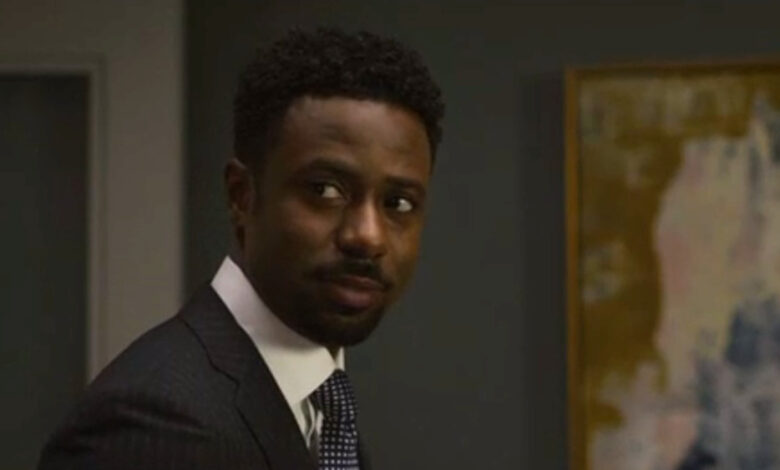
If Downton Abbey showcased his charm, HBO’s The Deuce revealed Gary Carr’s raw intensity and fearlessness. As CC, a savvy and menacing pimp navigating the rise of the porn industry in 1970s Times Square, Carr undertook one of his most complex and morally ambiguous roles. CC was not a villain written in broad strokes but a meticulously drawn character of ambition, survival, and chilling calculation. Carr’s performance was a masterclass in controlled menace, using stillness and a penetrating gaze to convey volumes about power, vulnerability, and corruption.
This role required a significant physical and psychological transformation, including a flawless New York accent. It highlighted Carr’s dedication to immersive research and his willingness to explore the darker facets of human nature. Working with creators David Simon and George Pelecanos, known for their gritty, novelistic approach to television, allowed him to flex different creative muscles. The performance earned him new critical respect, firmly establishing that Gary Carr was an actor of formidable range, unafraid to dive into challenging, adult-themed material and emerge with a character of unsettling authenticity.
Key Takeaway: In The Deuce, Gary Carr embraced profound character complexity, delivering an immersive and chilling performance that demonstrated his fearless commitment to dark, psychologically demanding roles.
Versatility Demonstrated: Genre and Medium Hopping
A hallmark of Carr’s career is his deliberate avoidance of typecasting. Following the intensity of The Deuce, he shifted gears dramatically. He starred in the Amazon Prime thriller The Widow as a former soldier caught in a dangerous conspiracy, showcasing action-oriented physicality and emotional trauma. He then appeared in the BBC adaptation of Victor Hugo’s Les Misérables, playing the revolutionary Enjolras, which brought him back to a classical literary context but within a television miniseries format.
This fluid movement between genres—from period drama to gritty realism, from literary adaptation to conspiracy thriller—is a strategic choice. It prevents audience fatigue and keeps his creative challenges fresh. It also demonstrates a core technical proficiency: Gary Carr possesses the skill set to adapt his performance style to fit the directorial and tonal needs of vastly different projects. Whether the frame is intimate or epic, the tone bleak or romantic, he calibrates his performance accordingly, proving that true versatility is less about “showing range” and more about serving the story at hand with complete conviction.
Key Takeaway: Gary Carr’s career is defined by strategic versatility, as he adeptly navigates between genres and mediums, consistently recalibrating his performance to serve each unique story with authenticity.
The Actor’s Process: Methodology and Preparation
For an actor of Carr’s caliber, the final performance is the tip of the iceberg. His process is rooted in deep preparation. He is known for his extensive research, whether it involves studying the Harlem Renaissance for Downton Abbey, understanding the socio-economic landscape of 1970s Manhattan for The Deuce, or learning specific military protocols for The Widow. This background work allows him to build a character from a place of knowledge, informing his posture, speech patterns, and motivations.
He often speaks about finding the character’s “center” or core truth. This involves looking beyond the script’s dialogue to understand the character’s history, desires, and fears—the elements that drive their actions. He combines this internal work with external techniques, such as accent mastery and physical transformation. A theatre professional who has worked with him noted, “Gary has a quiet intensity on set. He arrives incredibly prepared, which allows him to be completely present and reactive in the moment. His preparation isn’t rigid; it’s a foundation that gives him the freedom to play.” This balance of meticulous planning and spontaneous reaction is a key to his compelling screen presence.
Key Takeaway: Gary Carr’s compelling performances are built on a foundation of intensive research and internal character work, which grants him the freedom to be authentically present and reactive during filming.
The Snoochie Shy Persona Explained: From Timidity to Authentic Expression
Representation and Industry Impact
The work of Gary Carr exists within a broader conversation about representation in film and television. His roles, particularly in period pieces, have contributed to a more inclusive historical narrative on screen. He has often chosen parts that present Black characters with agency, depth, and interiority, moving beyond stereotypical or peripheral roles. This conscious choice carries cultural weight, offering audiences nuanced portrayals that counteract historical omissions and broaden the scope of whose stories are deemed worthy of telling.
His success as a Black British actor crossing over to major American productions also paves the way for others. It demonstrates the global market for talent and challenges parochial casting assumptions. Carr navigates this space with a quiet professionalism, letting his work advocate for itself. His career trajectory suggests a growing, though still evolving, industry readiness to cast actors based on sheer capability and fit for a role, rather than being limited by reductive perceptions. This impact, while subtle, is a significant part of his professional legacy.
Key Takeaway: Through his choice of complex, agentic roles, Gary Carr has actively contributed to more inclusive and authentic representation in historical and contemporary storytelling, influencing industry norms.
Navigating Stardom: Privacy and Professionalism
In an age of pervasive social media and celebrity culture, Gary Carr maintains a notably private personal life. He grants interviews primarily in the context of promoting his work, focusing on the craft and the project rather than personal anecdotes. This separation between the public persona and the private individual is a deliberate and increasingly rare professional stance. It serves to keep the audience’s focus squarely on his characters, preserving the mystery that makes his performances so believable.
This approach reflects a classical view of acting as a service to the story, not a platform for self-aggrandizement. It demands that his work be the sole basis of his reputation, a risk that pays off in sustained credibility. For aspiring professionals, this model offers an alternative to the constant self-branding often seen today. It underscores that a long-term career can be built on consistent, high-quality output and professional conduct on set, rather than on the fluctuating trends of viral fame or personal publicity.
Key Takeaway: Gary Carr’s deliberate maintenance of privacy underscores a professional philosophy that prioritizes the work itself, allowing his performances to remain the uncontested focus of his public identity.
Collaborations and Creative Partnerships
The quality of an actor’s work is often illuminated by the creative partnerships they form. Gary Carr has had the opportunity to work with some of the most respected writers, directors, and producers in the industry. His collaboration with David Simon on The Deuce is a prime example, placing him within a gritty, journalistic style of storytelling that values moral ambiguity and social detail. Similarly, working with Julian Fellowes on Downton Abbey immersed him in the nuanced world of character-driven period drama.
These collaborations are not incidental; they are a reflection of mutual respect and aligned creative ambitions. Being sought out by such distinctive voices is a mark of the trust they place in his ability to execute their vision. For Carr, these partnerships provide a creative sandbox to explore different methodologies—from Simon’s extensive “bible” of character backstories to the more traditional blocking of a period piece. Each collaboration adds a new tool to his kit and expands his understanding of narrative possibility.
Key Takeaway: Strategic collaborations with acclaimed creators like David Simon and Julian Fellowes have been instrumental in challenging Gary Carr and showcasing his adaptability within vastly different storytelling traditions.
Future Trajectory and Project Selection
Looking forward, the trajectory of Gary Carr’s career will be fascinating to watch. Based on his history, his project selection will likely continue to be driven by character complexity and directorial ambition rather than sheer commercial scale. He seems drawn to stories that examine societal structures, human psychology, and moral gray areas. One can anticipate him taking on more leading roles, potentially in limited series or feature films that allow for even deeper character exploration.
Current trends in the industry, such as the rise of global streaming platforms and a hunger for morally complex anti-heroes or historically overlooked narratives, play to his strengths. He is well-positioned to be a compelling lead in a politically charged thriller, a sophisticated drama about the arts, or a groundbreaking historical film. His choices will likely continue to surprise, as he values artistic growth over predictable career moves. Readers often benefit from following such actors, as their filmography becomes a curated selection of quality storytelling.
Key Takeaway: Gary Carr’s future project choices are expected to remain aligned with character depth and narrative ambition, positioning him for compelling lead roles in the evolving landscape of global streaming and complex storytelling.
A Case Study in Authenticity: The Accent Work
A tangible example of Carr’s hands-on dedication is his masterful accent work. For American audiences, his flawless New York accent in The Deuce was so convincing that many were unaware he was British. This achievement wasn’t accidental. In preparation, he worked extensively with a dialect coach, but also immersed himself in source material from the era—film, music, interviews—to capture not just the sounds, but the rhythm and attitude of the speech.
He also spent significant time in New York, observing and listening to the city’s unique cadences. This practical, immersive approach goes beyond technical mimicry; it seeks to internalize the accent as an organic part of the character’s thought process. The result was a performance that felt lived-in and authentic, where the voice was a seamless extension of CC’s personality. This level of detail, often invisible when done well, is a hallmark of Carr’s commitment to erasing the actor and revealing only the character.
Key Takeaway: Gary Carr’s impeccable accent work, such as his flawless New York dialect in The Deuce, stems from immersive research and internalization, ensuring authenticity that supports rather than distracts from character.
Defining the Craft: The Actor’s Instrument
What defines a professionally trained actor like Gary Carr? It is the holistic development of the actor’s instrument: the body, voice, and emotional accessibility. Formal training, such as that at the Guildhall School, systematically strengthens this instrument. The voice is trained for projection, clarity, and endurance. The body is made agile and expressive, capable of conveying character through movement. Crucially, the actor learns techniques to access and channel genuine emotion safely and repeatably for the camera or live audience. This technical foundation separates the professional who can deliver consistently under pressure from the untrained performer reliant on instinct alone. For Carr, this training is the bedrock upon which his intuitive performances are built.
Key Takeaway: Professional actor training develops the holistic instrument of body, voice, and emotional technique, providing the reliable foundation for Gary Carr’s consistently authentic performances.
The Table of Transformation: Gary Carr’s Key Roles
The following table outlines the transformative journey across some of Carr’s defining roles, highlighting the specific challenges and skills demonstrated in each.
| Project & Role | Genre/Medium | Core Challenge | Skill Demonstrated |
|---|---|---|---|
| Downton Abbey (Jack Ross) | Period Drama TV | Integrating a modern, charismatic Black character into a rigid, historical social hierarchy. | Nuanced charm, period manners, conveying social commentary with subtlety. |
| The Deuce (CC) | Period Drama/Crime TV | Portraying a morally complex, menacing pimp with psychological depth and a flawless American accent. | Immersive character study, controlled menace, masterful dialect work, physical transformation. |
| The Widow (Anthony) | Conspiracy Thriller TV | Shifting to an action-oriented role depicting a soldier grappling with PTSD and a dangerous mission. | Physicality, conveying internal trauma, sustaining tension in a fast-paced plot. |
| Les Misérables (Enjolras) | Literary Drama TV | Embracing a classic, idealized revolutionary figure within a beloved canonical story. | Oratorical passion, embodying ideological fervor, ensemble leadership. |
| The Gospel of Luke | Stage Play | Carrying a leading role in a demanding, text-heavy classical stage production. | Vocal projection, sustained emotional arc, live audience connection. |
The Evergreen Perspective: Building a Lasting Career
In an industry obsessed with the “next big thing,” the career of Gary Carr offers an evergreen model for longevity. It is built not on hype, but on a compound interest of skill, reputation, and smart choices. The principles he exemplifies—rigorous training, versatile skill application, professional discretion, and narrative curiosity—are timeless. They are resistant to the shifting algorithms of fame and speak to a deeper value system within the arts.
For anyone building a creative career, the lessons are clear: invest deeply in your core craft, choose projects that challenge rather than comfort you, collaborate with those who elevate your work, and let the quality of your output define you. As the media landscape fragments and re-forms, these constants remain. The sustained relevance of an actor like Gary Carr proves that audiences and creators alike will always gravitate toward undeniable talent coupled with professional integrity.
Key Takeaway: Gary Carr’s career provides an evergreen blueprint for artistic longevity, emphasizing craft over celebrity, strategic versatility over typecasting, and professional integrity as the cornerstone of sustained relevance.
Actionable Insights Checklist
Before concluding, consider these key takeaways for artists and professionals inspired by this career path:
- Prioritize foundational training to develop a reliable technical instrument.
- Embrace versatility to avoid typecasting and maintain creative engagement.
- Conduct deep, immersive research for every role to build authentic character backstories.
- Seek collaborations with respected creators to learn and grow.
- Let your work speak loudest, maintaining a professional focus on the craft rather than the periphery of fame.
- Choose roles that offer complexity and contribute to broader cultural conversations.
Conclusion
Gary Carr’s journey from the stages of London to the pinnacle of international television is a narrative of purposeful artistry. It dismantles the myth of the accidental star, replacing it with the reality of the prepared artist. Each role, from the groundbreaking Jack Ross to the terrifying CC, represents a deliberate step in an ongoing exploration of human nature and storytelling form. His career stands as a powerful argument for the enduring relevance of craft, the importance of authentic representation, and the quiet power of professionalism.
As he continues to select roles that challenge both himself and audience expectations, Gary Carr secures his place not merely as a talented actor, but as a significant cultural figure. He demonstrates that impact is not always measured in decibels of fame, but in the resonance of a performance, the dignity of a career path, and the subtle expansion of what is possible on screen. For the viewer, his work offers profound engagement; for the industry, a standard of excellence; and for the aspiring artist, a masterclass in building a meaningful creative life.
Frequently Asked Questions (FAQ)
What is Gary Carr best known for?
Gary Carr is best known for his role as jazz singer Jack Ross in the global hit series Downton Abbey, which introduced him to an international audience. He also gained significant critical acclaim for his complex portrayal of the pimp CC in the HBO series The Deuce, showcasing his impressive range and depth as an actor.
Where did Gary Carr train as an actor?
He received his formal professional training at the prestigious Guildhall School of Music and Drama in London. This intensive classical training program provided the foundational techniques in voice, movement, and character analysis that underpin his sophisticated screen and stage performances.
Has Gary Carr performed in theatre?
Yes, his professional roots are firmly in theatre. Before his screen breakthrough, Gary Carr built a solid reputation on the British stage, including performances with the Royal Shakespeare Company. This theatrical background is central to his disciplined approach and command of character.
What was Gary Carr’s role in The Deuce?
In The Deuce, Gary Carr played CC, a calculating and ambitious pimp navigating the gritty world of 1970s Times Square during the rise of the porn industry. His performance was noted for its chilling authenticity, psychological complexity, and flawless American accent.
What are some of Gary Carr’s other notable projects?
Beyond his most famous roles, he has starred as Anthony in the thriller series The Widow, played the revolutionary Enjolras in the BBC’s Les Misérables adaptation, and appeared in films like The Girl in the Spider’s Web. His filmography reflects a consistent choice of diverse and challenging material.