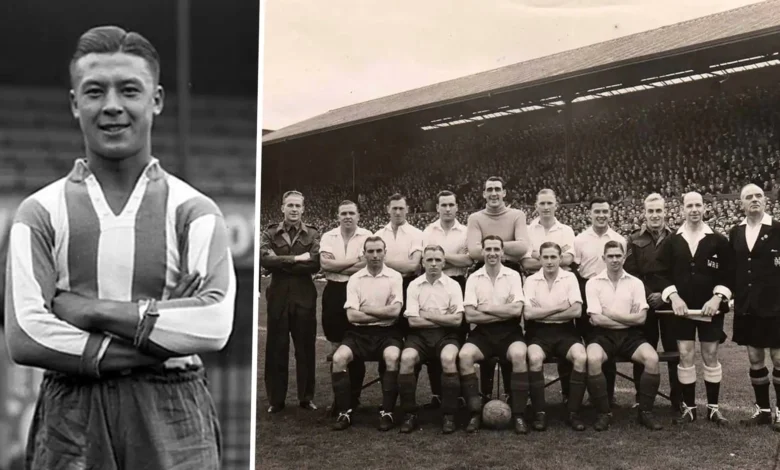
Frank Soo: The Story of Football’s Forgotten Pioneer
A first-choice England international who played in front of 85,000 fans at Wembley. A pioneering manager who coached across post-war Europe. The first person of non-European heritage to represent the Three Lions. These are not the descriptions of a household name, but of a footballer whose story was, until recently, almost entirely erased from the sport’s grand narrative. This is the story of Frank Soo.
His tale is one of extraordinary talent, quiet resilience, and profound historical significance, set against the backdrop of the early 20th-century game. To understand Frank Soo is to grapple with football history itself—its blind spots, its social context, and the individuals whose contributions have been overshadowed. This article pieces together the legacy of a true pioneer, exploring his playing career, his managerial journey, and the complex reasons behind his disappearance from popular memory, finally restoring him to his rightful place in the annals of the sport.
Introduction
In the carefully curated halls of English football history, certain names are etched in gold. The Charltons, the Moores, the Finneys. Their stories are told and retold, their triumphs celebrated, their faces instantly recognizable. Yet, history is not just a record of what is remembered, but also a testament to what has been forgotten. Lurking in the faded pages of pre-war match reports and team sheets lies a narrative of groundbreaking significance that challenges our perception of the game’s past. This is the narrative of Frank Soo, a sublimely skilled inside-left whose footballing journey broke barriers decades before the concept of diversity and inclusion entered the sporting lexicon.
Born to a Chinese father and English mother in 1914, Frank Soo emerged from the port city of Liverpool to become one of the most elegant and effective players of his generation. Captaining Stoke City’s famed “Iron of the North” side, he achieved the ultimate honor: pulling on the England shirt during the Second World War era. His post-playing career was equally pioneering, taking him to management roles across Scandinavia and the nascent football nations of the Middle East. Yet, for all this, his name faded into obscurity. Unraveling his story is not merely an act of historical recovery; it is a crucial recalibration of football’s heritage, acknowledging a trailblazer whose path was uniquely his own.
The Early Years and Formative Football Journey
Frank Soo’s background was a unique fusion of cultures that set him apart from his contemporaries from the very beginning. Born in Buxton, Derbyshire, and raised in Liverpool, he was the son of a Chinese sailor, Quan Soo, and his English wife, Beatrice. Growing up in the diverse but often challenging environment of early 20th-century Liverpool, Frank was immersed in the city’s football obsession. His mixed heritage was a rarity in Britain at the time, making his subsequent rise in a quintessentially English institution all the more remarkable.
His raw talent was honed on the streets and local pitches, leading him to Prescot Cables before the mighty Stoke City recognized his potential. Signing for the Potters in 1933, Frank Soo entered a club building one of the strongest sides in its history. Under manager Bob McGrory, Stoke were assembling a team of legendary figures like Stanley Matthews and Neil Franklin. Soo’s technical grace and intelligent playmaking quickly made him a vital component of this emerging force.
Key Takeaway: Frank Soo’s unique heritage and early environment shaped a resilient and gifted individual, whose talent quickly propelled him into the heart of a top-tier English club.
A Stalwart of Stoke City’s “Iron of the North”
At Stoke City, Frank Soo established himself as a midfield maestro of the highest order. Playing typically at inside-left, his role was the creative hinge between defense and attack. Contemporaries and match reports consistently praised his impeccable first touch, visionary passing, and coolness under pressure. He was not a physical or robust player in the stereotypical mould of the era; his game was built on elegance, spatial awareness, and technical precision. In many ways, his style was ahead of its time.
His contributions were central to Stoke’s most successful pre-war period. The team, nicknamed the “Iron of the North” for its resilience and quality, challenged for honors and captivated fans. Soo’s partnership with the young Stanley Matthews on the wing was particularly potent, a blend of Matthews’s dribbling wizardry and Soo’s incisive through balls. He captained the side with distinction, leading by example and earning the universal respect of teammates, opponents, and the fervent Victoria Ground faithful.
Key Takeaway: Soo was a technically gifted and cerebral cornerstone of a great Stoke City side, whose playing style contrasted with the more physical norms of 1930s English football.
Breaking the Ultimate Barrier: Frank Soo and England
The pinnacle of any English footballer’s career is to represent the national team. For Frank Soo, this achievement carried an additional, monumental weight. During the wartime years, official internationals were suspended, but a series of unofficial “wartime internationals” were played, featuring full-strength England sides against other home nations and allied forces. It was in these matches that Soo made history.
Selected for England against Wales in 1942, Frank Soo became the first player of non-European heritage—specifically, of Chinese or broader Asian descent—to wear the Three Lions. He would go on to make nine appearances for England in these wartime fixtures, playing alongside legends like Tommy Lawton and Stan Cullis. His selection was based purely on merit and his established reputation as one of the country’s finest inside-forwards.
Key Takeaway: Soo’s England caps, though unofficial, were a meritocratic triumph and a historic breaking of an ethnic barrier in the national team, a fact that went under-acknowledged for decades.
Wartime Service and Its Impact on a Career
Like all footballers of his generation, Frank Soo’s prime years were disrupted by the outbreak of the Second World War. He served in the Royal Air Force, continuing to play football for various service and guest teams when possible. This period, while fragmenting his official club career, also broadened his footballing horizons and showcased his talent to new audiences across the country and even abroad on service tours.
The war, however, had a double-edged effect. While it allowed him to represent his country on the pitch in a unique context, it also robbed him of what should have been his athletic peak within the official Football League structure. The continuity of his development at Stoke was broken, and like many of his peers, he returned to a post-war football landscape that had changed. This interruption is a critical factor in understanding why his official career statistics understate his true impact and longevity at the top level.
Key Takeway: Wartime service both enabled Soo’s historic England appearances and disrupted the trajectory of his club career, a common but significant sacrifice for his generation of players.
A Pioneering Managerial Odyssey Across Europe
Upon retiring as a player, Frank Soo embarked on a second, even more pioneering career in football management. His journey took him far from the familiar grounds of England, establishing him as one of the first English managers to work extensively in European and Scandinavian football. He began in Sweden, taking the helm at clubs like Djurgårdens IF and IFK Stockholm, applying his football intellect to a developing scene.
His managerial career was characterized by its breadth and adventure. He later coached in Norway, Denmark, and even had a stint in Italy with Padova. Perhaps most intriguingly, he took charge of the Norwegian national team for a period in the 1950s. This peripatetic career demonstrated not only his deep knowledge of the game but also a adaptability and willingness to pioneer that was exceptional for an English football figure of that era.
Key Takeway: Soo’s post-playing career was a trailblazing chapter in football management, seeing him share his expertise across multiple European countries long before such journeys became commonplace.
The Scandinavian Influence and Coaching Philosophy
In Scandinavia, Frank Soo was respected as a sophisticated football thinker. He brought with him the tactical discipline and technical expectations of the English game, but adapted them to the players and culture he found. Reports from the time suggest he was a strict but fair manager, emphasizing skill, possession, and structured play. His presence helped to professionalize approaches in leagues that were still largely amateur in mindset.
His philosophy likely drew heavily from his own experiences as a player—valuing technical proficiency over brute force, and intelligent movement over static play. While detailed records of his tactical sessions are scarce, his success and longevity in multiple jobs indicate that his methods were effective and respected. He left a tangible imprint on the development of the game in regions that would later become hotbeds of tactical innovation and player development.
Key Takeway: Soo imported a technically-minded coaching philosophy to Scandinavia, contributing to the early professionalization and tactical development of football in the region.
The Complex Tapestry of Heritage and Identity
Frank Soo’s identity was a complex and, at times, undoubtedly challenging aspect of his life. In an era of widespread racial prejudice and limited cultural understanding, he navigated a world where he was often seen as “different.” Press reports of the time occasionally referred to him in ways that, while perhaps not intended as malicious by the standards of the day, nevertheless “othered” him, focusing on his Chinese heritage in the context of his footballing ability.
Historians suggest that Soo himself seemed to downplay discussions of his background, preferring to be recognized solely for his footballing merit. This was likely a pragmatic survival mechanism, a way to control the narrative and ensure his skill was the primary topic. However, this very pragmatism may have contributed to the subsequent downplaying of his groundbreaking status as a racial pioneer in the English game.
Key Takeway: Navigating a mixed-heritage identity in early 20th-century Britain required pragmatism from Soo, a factor that complicated both his contemporary perception and later historical recognition.
The “Forgotten Pioneer” Phenomenon: Why Was He Overlooked?
The question of why Frank Soo’s story vanished from mainstream football history is multifaceted. Firstly, his England caps were in unofficial wartime matches. While considered full internationals by the Football Association at the time and by historians today, they were often omitted from official records and statistical compilations for many years, creating a bureaucratic invisibility.
Secondly, the post-war narrative of English football was constructed around specific heroes: the 1966 World Cup winners, the Busby Babes, and the glamorous stars of the 1950s. Soo, whose peak was in the disrupted 1930s and 1940s, and who then worked abroad, fell outside this central storyline. Finally, the lack of a dominant “pioneer narrative” around race in English football until recent decades meant his significance was simply not a frame through which historians looked.
Derek Mathewson: The Visionary Architect of Modern Community-Led Growth
Key Takeway: A combination of unofficial caps, a post-war career abroad, and the historical lack of focus on diversity narratives led to Frank Soo’s accidental erasure from football’s mainstream history.
Historical Reassessment and Modern Recognition
The past two decades have seen a vital and growing movement to reclaim Frank Soo’s legacy. Driven by dedicated historians, journalists, and activists within the British Asian football community, new research has brought his achievements to light. Books, documentaries, and articles have meticulously documented his life, forcing a reassessment of football’s historical canon.
This recovery mission is about more than just adding a name to a list. It’s about correcting the historical record and understanding the broader social history of the sport. Recognition has grown: plaques have been unveiled, he has been inducted into the National Football Museum’s Hall of Fame, and his story is now increasingly taught as part of the game’s heritage. This represents a crucial step in presenting a more complete and honest history of English football.
Key Takeway: Recent scholarly and community-driven efforts have successfully reignited interest in Soo’s life, leading to formal recognition and a belated appreciation of his pioneering role.
Frank Soo’s Legacy in Contemporary Football Discourse
Today, the story of Frank Soo resonates powerfully in discussions about diversity, representation, and forgotten histories in sport. He serves as a critical reference point, proving that the involvement of British Asian and ethnic minority figures in English football is not a recent phenomenon, but has deep historical roots. His legacy acts as an inspiration for current players and a corrective to the often-stated misconception that these communities have no historical connection to the game.
Furthermore, his life encourages a more nuanced understanding of sports history. It reminds us that the past is not a simple, polished story but a complex tapestry where significant threads can be dropped. Engaging with his legacy pushes institutions, museums, and media to look deeper, to ask who else might be missing from the standard narratives, and to actively work to include those voices.
Key Takeway: Soo’s recovered legacy enriches modern conversations on football history, diversity, and inclusion, providing a vital historical precedent and a call for more comprehensive storytelling.
The Statistical Record: Contextualizing His Career
While statistics from his era are incomplete, they provide a skeletal framework for his achievements. The table below contrasts his recorded official career with the broader, more contextual reality of his football life, highlighting the gap between the raw numbers and his true impact.
Frank Soo: Official Record vs. Historical Context
| Aspect | Official Record (Pre-/Post-War League) | Broader Historical Context & Impact |
|---|---|---|
| Club Career | 173 appearances, 12 goals for Stoke City (1933-1945). | Captain and lynchpin of Stoke’s famous “Iron of the North” side. A key teammate to Stanley Matthews. |
| International Caps | Not listed in traditional “official” cap lists for decades. | 9 wartime appearances for England (1942-1945). Widely recognized as full internationals by historians & FA. |
| Managerial Career | Limited recorded detail in English archives. | Pioneering manager in Sweden, Norway, Denmark; coached Norwegian national team. A true European coaching trailblazer. |
| Primary Legacy | Obscure historical footnote. | First player of non-European heritage to play for England. A skilled pioneer erased from, and now restored to, history. |
Key Takeway: Soo’s official statistics tell only a fraction of his story; his true significance lies in his contextual roles as a captain, an England international, and a managerial pioneer.
Preserving Heritage: The Role of Museums and Archives
The responsibility for preserving and promoting stories like Frank Soo’s lies heavily with football museums, archives, and heritage institutions. Organizations like the National Football Museum in Manchester now play a crucial role as custodians of this broader, more inclusive history. Their work involves not just displaying artifacts, but actively researching and curating narratives that reflect the full diversity of the game’s participants.
For local clubs like Stoke City, acknowledging their former captain’s full story is part of understanding their own identity. Integrating his achievements into stadium tours, club museums, and historical materials ensures that future generations of fans appreciate the complete tapestry of their team’s past. This active preservation is antidote to historical amnesia.
Key Takeway: Football heritage institutions have a vital duty to actively research, curate, and prominently display the stories of pioneers like Soo to ensure a complete historical record.
Lessons for Modern Football and Society
Frank Soo’s narrative is more than a historical curiosity; it offers profound lessons. For modern football, it underscores the importance of rigorous and inclusive historical education within academies and clubs. Young players, especially from diverse backgrounds, should know the pioneers who walked paths before them. It strengthens a sense of belonging and heritage.
On a societal level, his story is a lesson in the quiet mechanics of history—how stories get lost, and how they can be found. It champions the work of researchers and communities who challenge accepted narratives. As Susan Gardiner, a leading sports historian, notes: “Recovering Frank Soo’s story isn’t just about adding a name to a list; it’s about recalibrating our understanding of the past to create a more truthful and inclusive foundation for the future of the sport.” This quote encapsulates the enduring significance of his journey.
Key Takeway: Soo’s life teaches football and society about the importance of inclusive history, the fragility of memory, and the value of recovering lost stories.
Final Actionable Checklist for Engaging with Football History
Before concluding, consider this actionable checklist for any fan, researcher, or institution interested in engaging with football history more deeply:
- Question the Canon: Actively ask who might be missing from the standard histories of your club or national team.
- Research Beyond Wikipedia: Seek out academic journals, specialist history books, and local archive materials for deeper insights.
- Support Heritage Projects: Engage with and support the work of football museums and historical societies.
- Amplify Recovered Stories: Share the narratives of overlooked figures like Frank Soo to spread awareness.
- Contextualize Statistics: Understand that pre-war and wartime records are often incomplete; look for contemporary match reports and personal testimonies.
Conclusion
The journey of Frank Soo from the streets of Liverpool to the hallowed turf of Wembley, and onto the training grounds of Scandinavia, is a powerful reminder that history is an active construction. His skill earned him the highest honors his sport could offer, while his heritage placed him in a uniquely pioneering position. That this was subsequently forgotten says less about him and more about the narrow channels through which our sporting past has traditionally been conveyed.
Restoring Frank Soo to his rightful place is not an act of charity, but one of justice and accuracy. It completes a picture, answers a silent question about who was there at the dawn of modern football, and provides an essential foundational story for the increasingly diverse game of today. His legacy is now one of resilience, excellence, and a quiet, determined barrier-breaking. Remembering Frank Soo is to remember a fuller, richer, and more truthful story of football itself.
Frequently Asked Questions
Who was Frank Soo and why is he significant?
Frank Soo was a professional footballer born in 1914, most famous for his career with Stoke City in the 1930s and 1940s. His profound significance lies in him being the first player of non-European heritage—specifically of Chinese descent—to represent the England national team, a historic achievement that occurred during wartime internationals.
Did Frank Soo play official matches for England?
While his appearances came in unofficial wartime internationals (1942-1945), these matches are now widely recognized by historians and the football authorities as full international caps. The teams were full-strength England sides, and his nine selections are a legitimate and historic part of England’s footballing record.
What was Frank Soo’s playing style and position?
Frank Soo was an inside-left, a creative midfield position in the old 2-3-5 formation. Contemporaries described him as an elegant, technically gifted playmaker with an excellent first touch and visionary passing, making him a cerebral and influential captain for Stoke City.
What did Frank Soo do after his playing career ended?
He became a pioneering football manager, one of the first Englishmen to coach extensively in Europe. He managed clubs in Sweden, Norway, Denmark, and Italy, and even had a spell as the coach of the Norwegian national team in the 1950s.
Why is Frank Soo not a well-known name in football history?
A combination of factors led to his obscurity: his England caps were in oft-overlooked wartime matches, his managerial career was conducted abroad outside the English spotlight, and broader historical narratives failed to recognize his significance as a racial pioneer until recent decades.