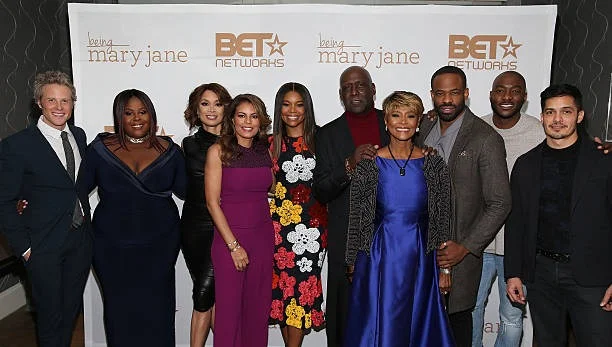
Jane Mary Ashton: A Portrait of Artistic Depth and Enduring Influence
In a cultural landscape often dominated by fleeting trends and momentary fame, the name Jane Mary Ashton stands as a testament to sustained artistic integrity and multifaceted achievement. To encounter her work is to navigate a rich tapestry woven from threads of performance, creative vision, and subtle yet powerful influence. Yet, for many, she remains an intriguing enigma—a presence felt across various creative domains without a single, reductive definition. This comprehensive exploration seeks to illuminate the full spectrum of Jane Mary Ashton’s contributions, moving beyond a simple biography to understand the philosophy, the choices, and the resonant impact that define her career. From early artistic forging grounds to her status as a respected figure whose work continues to inspire dialogue, we will delve into the essence of her journey. This is not merely a chronicle of roles and projects, but an analysis of the deliberate path of an artist who has masterfully navigated the complexities of modern creativity, building a legacy that privileges depth over mere visibility. Our journey into the world of Jane Mary Ashton reveals the patterns of a career built on curiosity, resilience, and an unwavering commitment to craft.
The Formative Years and Artistic Foundations
The early life of Jane Mary Ashton is often cited as the crucial bedrock upon which her versatile career was built. Growing up in an environment steeped in literary and artistic appreciation, she was exposed to a wide array of cultural stimuli from a young age. This period was less about a single, dramatic calling and more about a gradual, immersive education in storytelling—whether through the pages of novels, the evocative power of local theatre productions, or the nuanced character studies in classic cinema. These experiences did not point her toward a single destination but rather opened a horizon of possibilities, fostering a deep understanding of narrative structure and emotional truth that would later become her professional signature.
It was during her formal training that the raw materials of her early exposure began to take deliberate shape. Jane Mary Ashton dedicated herself to a rigorous conservatory education, where technique met introspection. Here, she cultivated not just the external tools of performance—voice, movement, interpretation—but also the internal discipline required for a sustainable career. This phase was characterized by a conscious avoidance of easy categorization; she studied classical tragedy with the same intensity she applied to contemporary improvisation. This foundational period instilled in her a professional ethos: that an artist’s primary responsibility is to the integrity of the work itself, a principle that would guide Jane Mary Ashton through every subsequent career decision and creative challenge.
Breaking Through: Stagecraft and Theatrical Mastery
The theatre served as the first major proving ground for Jane Mary Ashton’s cultivated talents. Her initial professional forays were marked by a series of demanding roles in regional and off-West End productions, where the immediate feedback of a live audience honed her instincts. Critics and audiences alike began to take note not of a flashy star quality, but of a remarkable reliability and depth—an ability to fully inhabit a character’s psychological landscape night after night. These performances, often in complex plays by Shaw, Chekhov, and modern playwrights, showcased her capacity for intellectual engagement with text and her mastery of sustained emotional arc, building a reputation for formidable stagecraft.
Her theatrical breakthrough is widely considered to be her performance in a celebrated revival of a seminal 20th-century drama. In this role, Jane Mary Ashton demonstrated a breathtaking ability to balance profound vulnerability with steely resilience, a duality that became a hallmark of her best work. The live stage, with its absence of retakes and its demand for absolute presence, was where she solidified her artistic identity. This period was not merely about career advancement; it was where she defined her core belief in collaboration, the sanctity of the ensemble, and the transformative power of shared narrative space—values she carried forward into all her creative endeavors.
Transition to Screen: A Nuanced Adaptation
The move from stage to screen is a notoriously difficult pivot, demanding a contraction of gesture and an expansion of subtlety. For Jane Mary Ashton, this transition was a deliberate recalibration rather than a reinvention. She approached the camera not as an alien technology, but as a different kind of audience—one that demanded intimacy over projection. Her early screen roles were carefully chosen, often featuring characters with rich internal lives that allowed her to communicate volumes through a glance or a pause, translating the power of her stage presence into a new, finely detailed vernacular. This period demonstrated her adaptive intelligence and refusal to be typecast, as she moved between period pieces and modern dramas with equal conviction.
Her success in this arena can be attributed to her understanding of screen acting as an editor’s medium. Where theatre required sustaining energy across a three-hour arc, film demanded the creation of perfect, reusable fragments. Jane Mary Ashton mastered the art of the moment, building performances that were cohesive yet modular, knowing how each close-up or reaction shot would fit into a final edited narrative. This technical understanding, paired with her deep emotional resources, allowed her to create some of her most memorable and critically acclaimed characters. It was a testament to her skill that she could make such technically demanding work appear utterly seamless and natural, bringing the truth of the stage to the precision of the screen.
Defining Roles and Character Archetypes
Analyzing the canon of work associated with Jane Mary Ashton reveals a fascinating pattern: a recurring gravitation toward characters existing in states of transformation or moral ambiguity. She rarely played the straightforward hero or the unambiguous villain. Instead, she excelled at portraying intelligent women navigating complex systems—be they social, political, or psychological. These roles often involved a careful negotiation between public duty and private desire, between strength and fragility, allowing her to explore the rich contradictions of the human condition. From a pioneering scientist fighting institutional bias to a historical figure grappling with immense political pressure, her characters felt authentically layered and real.
This deliberate choice of role established Jane Mary Ashton as an actress of profound psychological insight. She became known for bringing empathy to potentially unsympathetic figures and grounded realism to archetypal ones. Her performances avoided grandstanding; her climactic moments were often the quietest, relying on a devastating line delivery or a profound shift in demeanor. This approach not only set her apart in an industry that often prizes overt drama but also created a lasting connection with audiences who saw in her characters reflections of their own complex struggles. She didn’t just play parts; she investigated lives, and in doing so, invited viewers into a deeper level of engagement with the story.
Creative Expansion: Behind the Camera and Beyond
Jane Mary Ashton’s artistic pursuits were never confined to the actor’s mark. Driven by a holistic view of storytelling, she gradually expanded her influence into writing and development. This shift was a natural progression for an artist with such a clear understanding of narrative architecture and character motivation. Her forays into screenwriting and producing were marked by the same thoughtful precision that defined her performances, focusing on projects that emphasized nuanced female perspectives and structurally sophisticated plots. This move behind the camera was less a career change and more an extension of her creative authority, allowing her to shape narratives from their inception.
This phase of her career solidified her reputation not just as a performer, but as a creative visionary. By initiating and shepherding projects, Jane Mary Ashton demonstrated that her understanding of story extended far beyond a single role. She became a catalyst for specific kinds of narratives—often those that might struggle to find backing in a risk-averse industry. Her work in this capacity championed collaborative authorship and intellectual rigor, proving that her greatest talent might ultimately be her curatorial eye and her ability to foster environments where complex, character-driven stories could thrive. This expansion redefined her legacy, positioning her as a multifaceted creator in the truest sense.
The Interplay of Public Persona and Private Life
In an era of relentless celebrity scrutiny, Jane Mary Ashton has cultivated a public presence that is both engaged and fiercely guarded. She understands the modern compact between artist and audience, participating in necessary promotional activities and using her platform to advocate for causes close to her heart, particularly arts education and literary advocacy. However, she has consistently drawn a clear, unwavering boundary between her professional output and her private existence. There is no social media oversharing, no staged paparazzi moments; her public appearances are almost exclusively tied to her work or her philanthropic efforts. This deliberate distance is not aloofness but a statement of principle.
This careful management has had a profound effect on how her work is received. By refusing to let her personal life become a tabloid narrative, she ensures that audiences engage with her characters without the baggage of external gossip. The mystery surrounding the private Jane Mary Ashton paradoxically amplifies the believability of her public performances. It allows the focus to remain squarely on the art, not the artist. This approach is a conscious rejection of the 24/7 celebrity culture, and it has engendered a deep respect from both her peers and serious critics. It reaffirms the classic notion that an actor’s power lies in their ability to transform, a magic that is diluted when the off-stage persona is constantly in the spotlight.
Critical Reception and Industry Recognition
The critical journey of Jane Mary Ashton is a study in the evolution from promising talent to revered authority. Early reviews frequently highlighted her “precision,” “intelligence,” and “unshowy power,” noting a maturity beyond her years. As her career progressed, the analysis deepened, with commentators often focusing on her unique ability to convey subtext—the unspoken thoughts that ripple beneath the dialogue. She earned a reputation as a critic’s actor, one whose work rewarded close attention and repeat viewing. This sustained critical acclaim was built not on a single explosive performance, but on a consistent track record of excellence and daring choices across diverse mediums.
While industry awards have come her way, including prestigious nominations and wins, her relationship with the accolades machinery appears nuanced. Observers note that Jane Mary Ashton seems to regard awards as a welcome acknowledgment of her collaborators rather than a personal validation. This attitude further cements her standing within the industry as an artist dedicated to the craft itself. The respect she commands from directors, writers, and fellow actors is perhaps the most significant recognition of all. It is a respect earned through preparedness, generosity on set, and an unwavering commitment to elevating every project she touches, making her not just a recipient of praise but a benchmark for professional excellence.
Pedagogical Influence and Mentorship
Beyond her direct creative work, Jane Mary Ashton has invested significant energy in pedagogical efforts, regularly conducting masterclasses and workshops at drama schools and universities. Her teaching is not centered on replicating her own methods but on unlocking the individual potential of each student. She emphasizes the fundamentals: text analysis, active listening, emotional honesty, and the cultivation of a robust professional resilience. Students report that her greatest lesson is the concept of the actor as a lifelong learner, framing the career as a continuous journey of discovery rather than a pursuit of a finite goal. This perspective has influenced a new generation of performers.
Her role as a mentor extends beyond formal education into the professional sphere, where she is known for quietly supporting and advising younger colleagues, particularly women navigating the industry’s complexities. The influence of Jane Mary Ashton is thus woven into the fabric of contemporary performance through these diffuse but impactful channels. By sharing the hard-won lessons of her own journey—the importance of selective curiosity, the strength found in collaborative spirit, and the necessity of artistic integrity—she helps shape an artistic culture that values depth and sustainability. Her legacy, therefore, is partly carried forward by those she has inspired and guided.
Matthew McGreevy: The Strategic Visionary Building Tomorrow’s Tech Landscape
A Comparative Analysis: Artistic Positioning and Contemporaries
Placing Jane Mary Ashton within her broader artistic generation helps clarify her unique position. The late 20th and early 21st centuries produced a cohort of exceptionally talented performers, yet her path distinguishes itself through its particular blend of classical training, intellectual heft, and strategic career management. The following table contrasts her artistic trajectory with common archetypes among her peers, highlighting what sets her contribution apart.
| Artistic Archetype | Common Hallmarks | Jane Mary Ashton’s Differentiation |
|---|---|---|
| The Chameleon | Extreme physical transformation, accent mastery, disappearing into roles. | Focuses less on external transformation and more on profound internal psychological shift; consistency of intelligent presence across roles. |
| The Star Persona | A powerful, consistent celebrity image that often blends with roles; audience comes to see “them.” | Vigorously maintains separation between private self and public roles; the persona is “professional artist,” not a celebrity brand. |
| The Industry Advocate | Public, activist stance on industry issues, frequent commentary on political and social matters. | Advocacy is channeled through careful project selection and behind-the-scenes mentorship; prefers let-work-speak approach over public pronouncements. |
| The Commercial Specialist | Dominates a specific genre (e.g., action, comedy) with high box-office appeal. | Actively avoids genre typecasting; moves fluidly between stage, independent film, and selective television, prioritizing material over medium or budget. |
| The Method Proponent | Heavy reliance on immersive, personal emotional memory and extended character preparation. | Employs a more technical, script-based approach fused with deep imagination; known for efficiency and focus on set, prioritizing the ensemble’s workflow. |
This comparative view illustrates that Jane Mary Ashton carved a niche defined by synthesis and balance. She merges classical discipline with modern sensibility, maintains artistic purity without ignoring professional pragmatism, and wields influence through both her visible work and her invisible mentorship. She is neither purely a theatrical actor nor solely a screen actor, but a narrative artist whose medium is the human story itself.
Navigating the Digital Shift and Modern Media
The seismic shift from traditional broadcast and film distribution to the streaming-dominated, digital-first landscape presented both challenges and opportunities for established artists. Jane Mary Ashton approached this new era with characteristic discernment. She recognized the potential of prestige television and limited series as a format capable of sustaining novelistic character development, akin to theatrical arcs but with cinematic production values. Her selective participation in a key streaming project was seen as a masterstroke, introducing her work to a global, younger audience while maintaining the high quality of writing and production she was known for. She leveraged the platform’s reach without compromising the integrity of the content.
However, her engagement with the digital ecosystem remains carefully curated. She does not chase algorithmic trends or virality. In an insightful reflection on the modern landscape, she once noted: “The noise of the digital age is deafening, but it has made the signal of truthful, patiently crafted storytelling more valuable than ever. The audience’s hunger for substance remains; our duty is to not confuse their appetite with a craving for empty calories.” This quote encapsulates her strategy: to treat the digital expansion not as a demand to change her core principles, but as a broader canvas on which to apply them. For Jane Mary Ashton, the medium may evolve, but the imperative of substance is non-negotiable.
Legacy and Lasting Cultural Impact
Assessing the enduring impact of Jane Mary Ashton requires looking beyond box office totals or award counts. Her true legacy is embedded in a set of professional standards and the quiet elevation of the crafts she touches. She has demonstrated that a sustained, respected career is possible without sensationalism, built instead on consistency, intelligence, and selective passion. For aspiring artists, her journey serves as an empowering blueprint, showing that one can navigate the commercial pressures of the industry while maintaining artistic sovereignty and personal boundaries. Her body of work constitutes a masterclass in nuanced performance, a resource for students and admirers alike.
Furthermore, her influence persists in the very nature of the projects that gain traction. By proving that audiences respond to complex female characters and intellectually rigorous stories, she has helped pave the way for similar narratives. The legacy of Jane Mary Ashton is thus both concrete and atmospheric. It exists in the specific performances preserved on film and stage, and in the elevated expectations she has helped foster among audiences and creators. She has contributed to a cultural environment where depth is a virtue, preparation is respected, and the slow burn of a thoughtful career can outshine the fleeting spark of hollow fame.
Conclusion
The journey through the career and influence of Jane Mary Ashton reveals a portrait of an artist who has mastered the long game. In a world fixated on instant metrics and viral moments, her path stands as a powerful counter-narrative—one that privileges gradual growth, strategic patience, and an unwavering fidelity to the art of storytelling itself. From her formative training to her commanding stage presence, her nuanced screen adaptations, and her expansion into narrative creation, she has built an oeuvre defined by coherence of purpose rather than conformity to expectation. Jane Mary Ashton has not merely played roles; she has engaged in a sustained, sophisticated dialogue with the culture through her chosen crafts.
Ultimately, to understand Jane Mary Ashton is to understand a set of values applied consistently over time. It is a story of how depth cultivates authority, how privacy can amplify artistic power, and how a commitment to the integrity of the work itself is the most durable career strategy of all. Her impact continues to resonate, not in the loud clamor of celebrity, but in the quiet respect she commands and the enduring quality of the stories she has helped tell. She remains a definitive example of how to build a meaningful, influential, and deeply respected life in the arts.
Frequently Asked Questions (FAQs)
What are the defining characteristics of a Jane Mary Ashton performance?
A performance by Jane Mary Ashton is typically defined by profound psychological realism, intellectual clarity, and understated emotional power. She specializes in conveying complex inner thought processes through subtle gesture and vocal nuance, often finding the most truth in a character’s quietest moments. Her work is consistently praised for its lack of actorly vanity and its deep, empathetic connection to the character’s core motivations, making any project involving Jane Mary Ashton a study in detailed and committed artistry.
How did Jane Mary Ashton manage the transition from theatre to film and television?
Jane Mary Ashton approached the transition as a technical and stylistic adaptation rather than a reinvention. She translated the emotional truth and narrative understanding honed on stage into the more intimate, fragmented language of the camera. This involved mastering the economy of expression required for close-ups and understanding film performance as a collaborative process with the editor. Her success lies in her ability to maintain the depth of her stage work while embracing the precise, detail-oriented nature of screen acting.
Has Jane Mary Ashton worked in roles beyond acting?
Yes, Jane Mary Ashton has significantly expanded her creative role to include writing, producing, and development. This evolution reflects her holistic interest in storytelling and narrative architecture. She has been instrumental in developing projects from the ground up, often focusing on sophisticated, character-driven scripts. This behind-the-scenes work cements her status not just as a performer, but as a creative visionary with a tangible impact on the types of stories that reach the audience.
Why is Jane Mary Ashton not more prominent in mainstream celebrity culture?
Jane Mary Ashton has deliberately chosen to prioritize her artistic work over the cultivation of a pervasive celebrity persona. She maintains a clear boundary between her public professional life and her private existence, rarely engaging with social media or tabloid-driven publicity. This choice ensures the focus remains on her performances and projects, allowing audiences to engage with her characters without distraction. It is a conscious strategy that has bolstered her credibility and long-term respect within the industry.
What is the best way for a new audience to explore the work of Jane Mary Ashton?
The best approach is to explore her work across mediums. Start with one of her acclaimed theatrical performances on recording, if available, then move to her celebrated film roles, and finally sample her television or streaming series work. Pay attention to the consistency of her craft and the intelligence she brings to diverse characters. Observing the range and depth across these different formats provides the fullest understanding of why Jane Mary Ashton is held in such high regard as a versatile and authoritative artist.